Mostly about building products, healthcare tech, and lessons learned along the way.
Loading articles
What the AI Tool Ecosystem Is Actually Telling You | Clint Johnson
What the AI Tool Ecosystem Is Actually Telling You
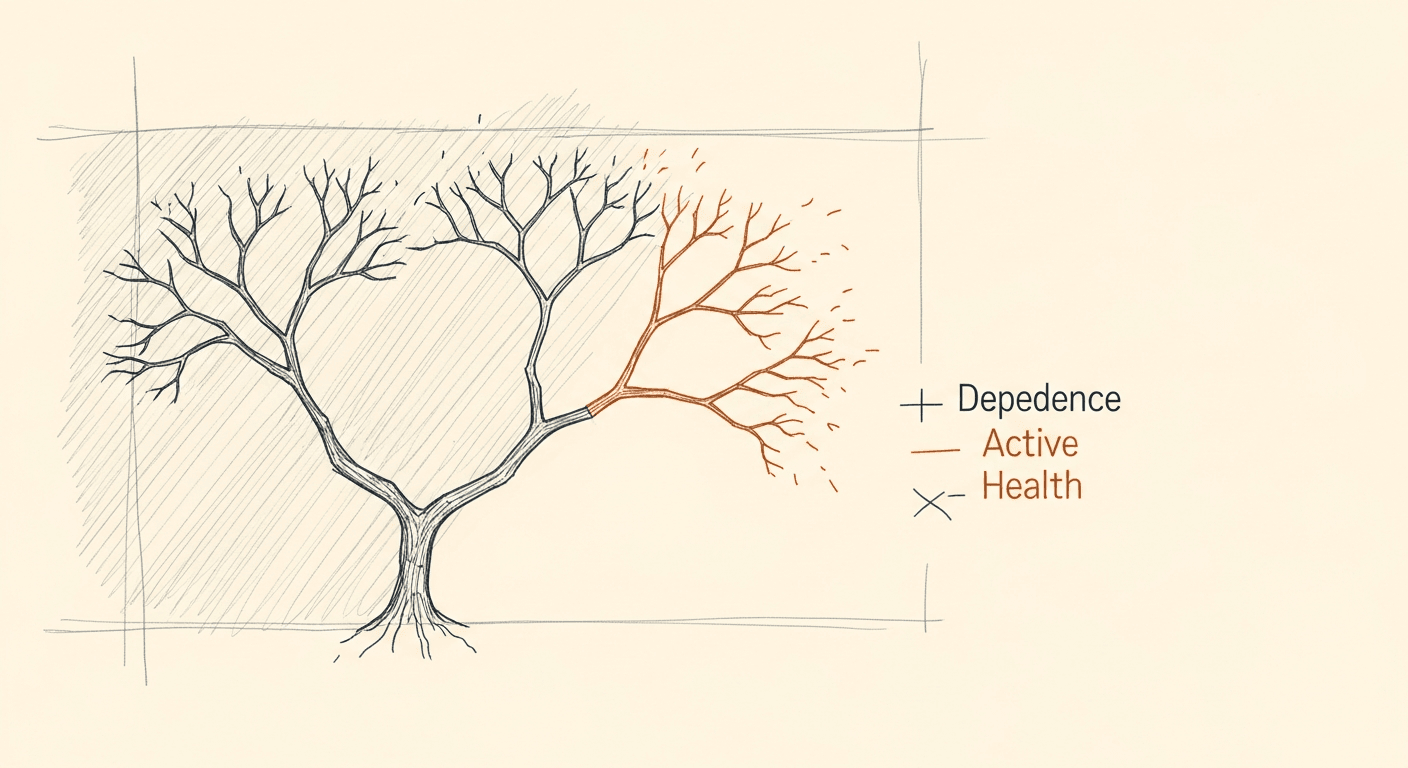
Not all branches in the ecosystem survive
I built a document ingestion pipeline on top of a tool that had 4,000 GitHub stars, an active Discord, and a founder who was posting demos every week. Six months later, the maintainer had moved on, the repo was stale, and I was doing an emergency rewrite under a compliance deadline.
That is the tax you pay for picking the wrong tool. I have paid it more than once.
After a while, you start to notice patterns. Not in individual tools, but in how entire categories of tools evolve. A detailed analysis of nearly 900 popular open source AI tools confirmed a lot of what I had learned the hard way: the AI tooling ecosystem has distinct maturity tiers, and which tier your tools live in should determine exactly how much you commit to them.
Here is how I read that ecosystem now, and what it has changed about the way I build.
The Landscape Problem Nobody Admits
The AI tooling space is not one ecosystem. It is a dozen overlapping ones at different stages of development, moving at different speeds, with dramatically different failure modes.
Some categories have already consolidated. Inference runtimes are basically sorted: vLLM and Ollama have won at different tiers, and anything you build on them is unlikely to be orphaned. Vector databases have real competition but real players: Chroma, Weaviate, Qdrant. These tools have funding, adoption curves that are years deep, and communities too large to collapse overnight.
Other categories are still a mess. Orchestration frameworks for multi-agent systems? There are twenty frameworks that all look credible at first glance and most of them will not exist in meaningful form in two years. Evaluation tooling? Fragmented enough that most teams are still rolling their own. The pattern holds: the further you are from inference and toward application logic, the more fragmented the ecosystem stays.
This is not random. It reflects how hard different problems are to standardize. Calling a model is a solved interface. Deciding when an agent should hand off to another agent, how to store and replay traces for debugging, how to run systematic evals across prompt versions, those are still genuinely unsolved at the abstraction level. The market reflects that.
I help teams ship AI in production — audits, consulting, custom agents, and eval systems. Start with an AI Audit (from $5k) for an honest read on what to build.
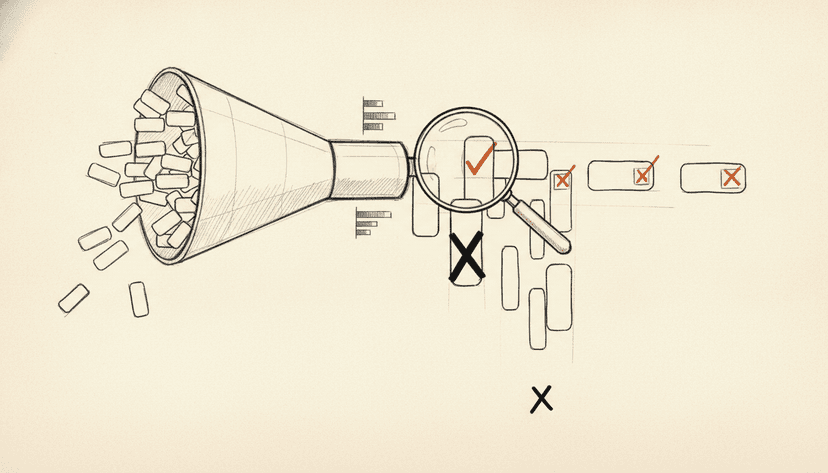
GitHub stars are the worst signal that people treat as the best one. Stars capture attention, not durability. The tools that accumulate stars fastest are usually the ones with the best demos, not the best architectures.
The signals that actually matter:
Corporate backing versus community-only. A tool with a $20M series A behind it and ten full-time contributors is structurally different from a one-person project with impressive stars. Neither is automatically better, but you should know which one you are building on. Corporate-backed tools have roadmaps and support contracts. Community tools have bus factors. Know which you're betting on.
Contributor velocity over time, not total stars. Look at whether the commit graph is growing or flattening. A project with 3,000 stars and thirty commits in the last ninety days is healthier than one with 10,000 stars and three commits. Many star counts are historical artifacts from a launch spike that never converted to a real community.
Integration depth in the ecosystem. Tools that every other tool integrates with are self-reinforcing. When LangChain or LlamaIndex adds native support for something, that is a stronger signal than press coverage. It means practitioners building on those stacks have voted with their code.
Age of the open issues and responsiveness of maintainers. If the issue tracker is full of two-year-old bugs with no response, the maintainers have mentally moved on even if they have not officially abandoned the project.
Whether the founders are building or pitching. This one is subjective but consistent. There is a pattern where open source AI tool founders shift from shipping to fundraising, and the repo quality follows about four months later.
The Framework I Use Before Committing to Any Tool
Before I add a dependency to a production system, especially in healthcare, I run through four questions:
1. What happens if this tool disappears in six months?
Not a hypothetical. It has happened to me. The answer should not be "we rewrite everything." If the answer is "we swap the adapter layer and rebuild in a sprint," the tool is appropriately contained. Tools that colonize your entire architecture are bets that require much higher conviction.
2. Is this category mature or experimental?
Mature categories (inference, embeddings, basic data loaders) have multiple viable options at similar quality levels. Experimental categories (novel agent frameworks, specialized eval tools, emerging orchestration patterns) often have one credible option that is also fragile. In mature categories, you can pick confidently and move. In experimental categories, you should use the thinnest possible abstraction layer so you can swap later.
3. Who else is building on this in a regulated environment?
In healthcare specifically, this matters more than anywhere else. A tool with PHI passing through it that gets abandoned is not just a productivity problem. It is a vendor management problem. It potentially triggers a security review. It creates documentation gaps in your risk management record. I look for evidence that other teams with similar compliance obligations are running this in production, not just that it is technically possible.
4. Does the project have a written deprecation and migration policy?
Most open source projects do not. The ones that do are signaling something about how they think about their users. It is a weak signal but it is directional.
Mature vs. Experimental: The Current Map
Based on how the ecosystem has consolidated, here is how I classify tool categories right now:
Embedding generation (the OpenAI and Cohere APIs, or sentence-transformers for local)
Vector stores (Chroma for development, Qdrant or Weaviate for production)
Document parsing for common formats (well-maintained libraries, not LLM-specific wrappers)
Use these with a thin abstraction layer:
Agent frameworks (LangGraph, LlamaIndex agents, real adoption but still evolving fast)
LLM observability and tracing (Langfuse and similar, legitimate but younger)
Retrieval augmentation pipelines (patterns are settling, implementations are not)
Stay flexible here. Do not over-invest:
Novel orchestration patterns (anything that claims to have solved multi-agent coordination)
Specialized eval frameworks beyond your own test suite
Any tool that launched in the last twelve months and is still pre-1.0
My Current Stack and Why
I want to be concrete because this is the kind of article where vague frameworks are easy and actual opinions are useful.
For inference, I use the model provider APIs directly with minimal abstraction. I want to feel every model change and API update rather than having a wrapper absorb it for me.
For retrieval, Qdrant in production. Chroma locally. The APIs are similar enough that switching is not painful.
For agent orchestration, I use LangGraph where I need explicit state machines and plain Python where I do not. Most systems do not need a framework for the orchestration layer. They need clear code.
For evals, I run a combination of automated assertions and human review on a sample. I do not trust any eval framework enough to hand it full authority over quality decisions. The eval layer is where I am most skeptical of third-party tools because the standards have not settled.
For observability, Langfuse because it has real adoption, a hosted option that respects data residency requirements, and a codebase that is actively maintained.
The Healthcare Tax
In healthcare, tool selection is a risk management decision. Generic AI engineering advice glosses over this.
When you build on a tool that handles or could handle PHI, you are implicitly making a vendor assessment. If that vendor, even an open source one, goes dark, you have a gap in your risk register. You have potentially broken your BAA chain if you had one. You have created work for your security and compliance team at exactly the wrong moment.
This does not mean you cannot use open source tools. It means you need to understand which parts of your stack touch sensitive data and ensure those parts have either a corporate entity behind them with formal agreements, or are small enough in scope that a controlled migration is feasible without a crisis.
The tools I am most conservative about are the ones in the middle of the data path, anything that stores, processes, or routes clinical context. The tools I am more relaxed about are at the development layer: code generation, testing infrastructure, local tooling that never sees production data.
The Meta-Lesson
The AI tooling ecosystem is not going to stop changing. The right response is not to wait for stability. You will wait forever. Build selection discipline into how you adopt tools from the start.
That means: classify before you commit. Keep your abstraction layers honest. Treat experimental categories as experiments. And in regulated environments, hold your data-layer tools to a higher standard than your development-layer tools.
The builders who get this right are not the ones who pick the best tools in 2026. They are the ones who have a system for picking tools well regardless of what the ecosystem looks like, because it will look different again in eighteen months.
The ones who get it wrong will be in the middle of another emergency rewrite when that happens.
I know what that feels like. Build the discipline instead.