Mostly about building products, healthcare tech, and lessons learned along the way.
Loading articles
Context Rot: The Silent Performance Killer in Your LLM Application | Clint Johnson
Context Rot: The Silent Performance Killer in Your LLM Application
Context rot: when more information makes the model worse
Something started going wrong six months into production on one of our healthcare AI systems.
The system handled clinical documentation: pulling relevant patient history, surfacing prior notes, generating structured summaries. In early testing it was sharp. Answers were specific, well-grounded, contextually aware. Then, as the patient records got longer and conversations accumulated more turns, the quality started slipping. Not dramatically. Just slowly. The AI began hedging where it used to be precise. It would reference outdated information from two visits ago while ignoring a note from last week that was directly relevant. It started echoing back generic clinical language instead of synthesizing what was in front of it.
We checked the model. Checked the prompts. Checked the retrieval pipeline. Everything looked fine on paper.
The problem was context rot.
What Context Rot Actually Is
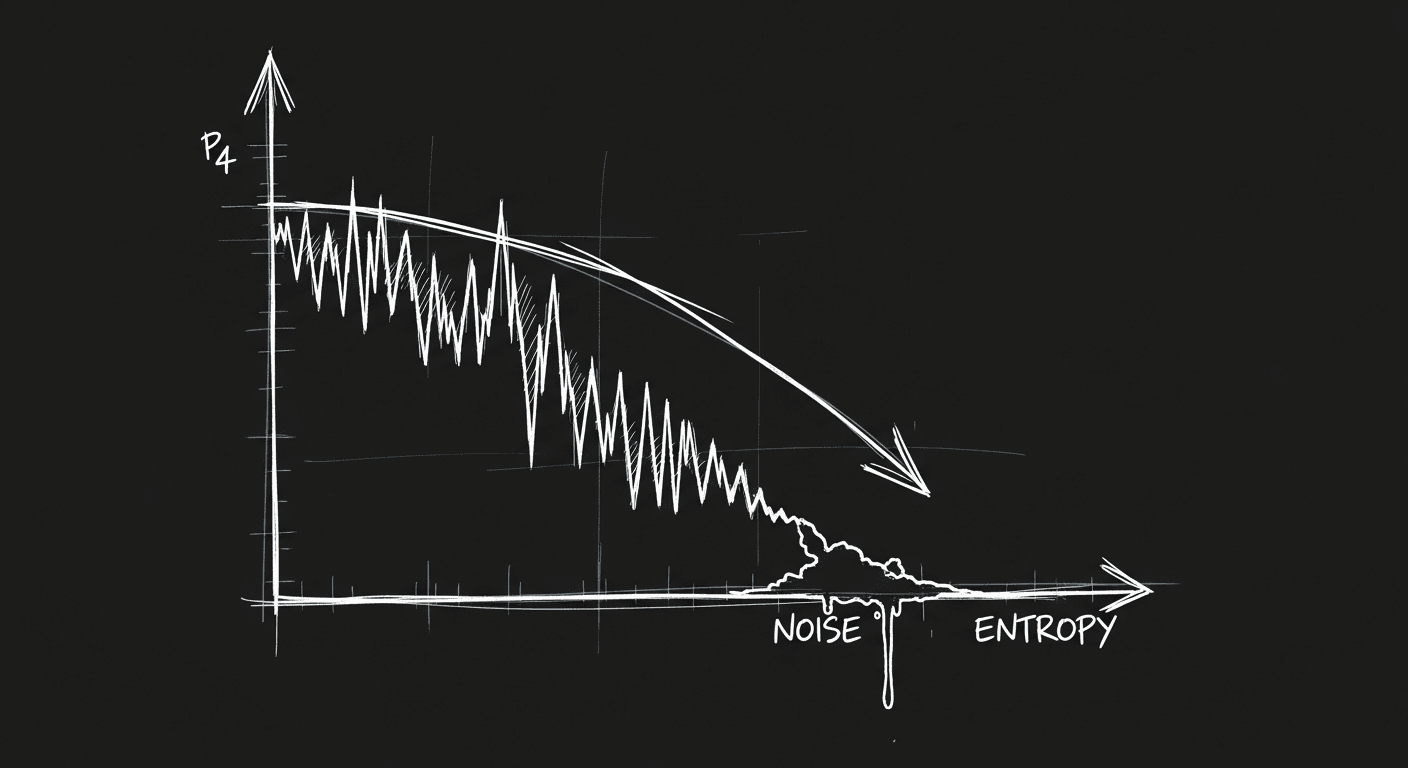
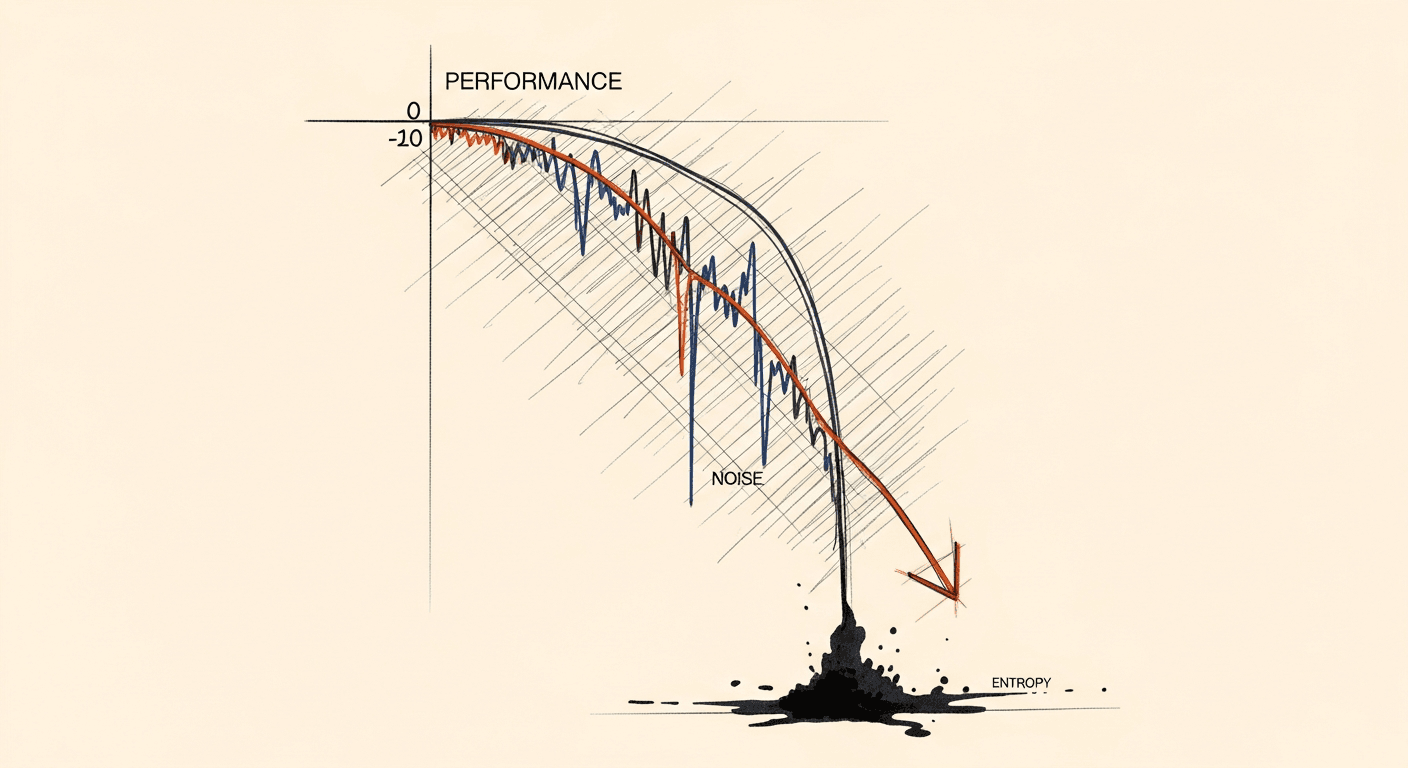
Context rot is the degradation of LLM output quality caused by the accumulation of irrelevant, redundant, or low-signal content in the input context. It's not a bug in your code. It's not a model regression. It's the predictable result of treating context as a bucket you fill rather than a signal you curate.
The counterintuitive part — and this is the part that trips up almost every production team — is that adding more context often makes performance worse, not better.
This runs against instinct. When the AI gives you a bad answer, the reflex is to give it more information. More history, more retrieved chunks, more system prompt guidance. But if that additional information is noisy — tangentially related, redundant with something already there, or simply irrelevant to the current query — you haven't helped. You've diluted the signal that was already present.
Irrelevant context is more harmful than insufficient context. A tight, relevant 2,000-token context will consistently outperform a sprawling, everything-including-the-kitchen-sink 20,000-token context on the same task.
How It Manifests in Production
Context rot rarely shows up as a hard failure. It shows up as a slow drift toward mediocrity. Here's what to look for:
The complexity gap. Simple queries keep working well. Complex, multi-part, or conversational queries start degrading. Simple queries can succeed on limited signal; complex queries require the model to synthesize and reason across context, and noise makes that harder.
I help teams ship AI in production — audits, consulting, custom agents, and eval systems. Start with an AI Audit (from $5k) for an honest read on what to build.
Early context burial. In long conversations, important context established early in the session gets effectively forgotten. Not because the model has a hard memory limit, but because relevant signal gets buried under the weight of subsequent noise. The model attends to recent content disproportionately when the total context is saturated.
Generic drift. The AI stops giving you the specific, grounded answers it gave in testing. It starts producing plausible-sounding generic responses. This is the model falling back to priors because it can't cleanly identify what in the context applies.
Retrieval thrash. In RAG systems, you start seeing retrieved chunks that are semantically adjacent to the query but not relevant to answering it. The chunks look right at the embedding distance level but add noise at the reasoning level.
The Mechanism
Large language models process their entire context window on every inference call. The attention mechanism distributes its capacity across everything present. When a substantial portion of that window is occupied by content irrelevant to the current task, the model's ability to attend to the relevant content degrades.
This is not purely an architectural limitation that longer context windows will fix. Longer windows can hold more information, but they don't make the model better at ignoring noise. With very long contexts, the "lost in the middle" problem often gets worse: models systematically underweight information in the middle of their context window relative to the beginning and end.
The compounding factor in production systems is that context grows over time. A conversation that starts clean accumulates turns. A RAG pipeline that retrieves three chunks per query has retrieved fifteen chunks by the fifth query refinement. A system prompt that was 500 tokens in v1 is 2,000 tokens in v5 because someone kept adding edge case instructions. No single addition caused the rot. The accumulation did.
Diagnosing Context Rot
Before you fix anything, you need to confirm this is what you're dealing with. The diagnostic process is straightforward but requires reading your context windows, which most teams don't do.
Step 1: Log your full context inputs. If you're not logging what actually goes into the model on every call — full context, not just the user query — you're operating blind. Turn this on. Sample a hundred real production calls.
Step 2: Read them manually. Not dashboards. Not aggregate metrics. Read the actual context windows your system is sending to the model. Do this for cases where quality was good and cases where quality was bad. You'll start to see patterns immediately.
Step 3: The noise ratio test. For each retrieved or injected chunk in your context, ask: would removing this change the correct answer to the query? If the answer is no for more than 30% of your chunks, you have a noise problem.
Step 4: Isolate by context length. Bucket your quality metrics by input token count. A clear negative correlation between context length and output quality on equivalent task types confirms context rot. This is the clearest signal.
Step 5: Test in isolation. Take a failing case and manually strip the context down to what you believe is the truly relevant subset. If quality recovers dramatically, the problem is noise, not the model.
Fixing It
There's no single fix. Context rot is a systems problem, which means the solution is a set of practices rather than a single intervention.
Semantic Relevance Filtering
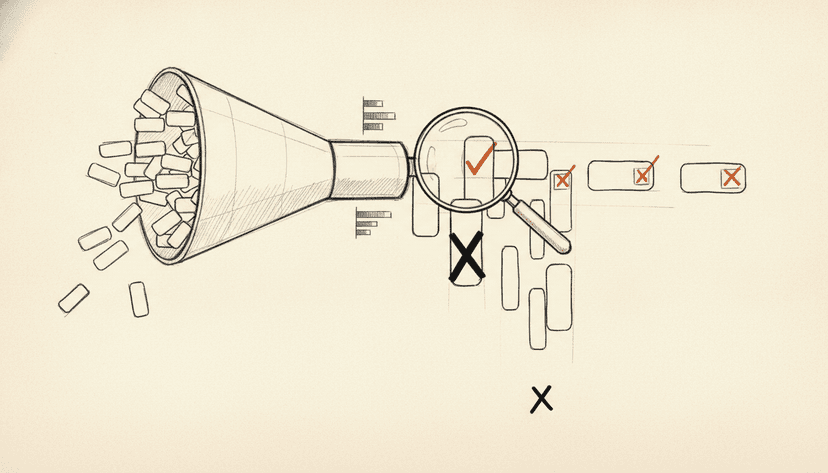
Not all retrieval is equal. Most RAG pipelines retrieve on semantic similarity: chunks that are close to the query in embedding space. Semantic similarity is not the same as relevance to answering the query. You need a filtering step between retrieval and injection.
A reranker model (cross-encoder) can score retrieved chunks on actual relevance to the specific query, not just semantic proximity. Drop chunks below a relevance threshold rather than always injecting top-k. In our healthcare system, going from fixed top-5 retrieval to threshold-gated retrieval cut average context length by 40% and improved answer quality measurably.
Subagent Isolation for Noisy Inputs
When you have a high-volume, potentially noisy input — raw logs, large documents, long conversation histories — don't dump it directly into your main agent context. Route it through a subagent first.
The subagent's job is summarization and extraction: given this raw input, what are the five things most relevant to the current task? The summary it produces goes into the main context. The raw input doesn't. Bad context is computationally cheap but cognitively toxic.
Structured Context Compression
For conversational systems, build explicit context compression into the conversation lifecycle. Rather than keeping every turn verbatim, maintain a structured state object: key entities mentioned, decisions made, constraints established, open questions. Compress older turns into this structure. The model gets the information it needs without the noise of exact phrasing from twelve turns ago.
This requires upfront design work, but it scales. Raw conversation history doesn't.
Context Pruning Rules
The simplest fix that teams skip: prune your system prompt. Look at every instruction in there and ask whether it's relevant to the current task category. Build conditional injection so that context relevant only to edge cases doesn't appear in every call. The system prompt that covers every possible scenario also performs worst on the common cases.
Monitor Continuously
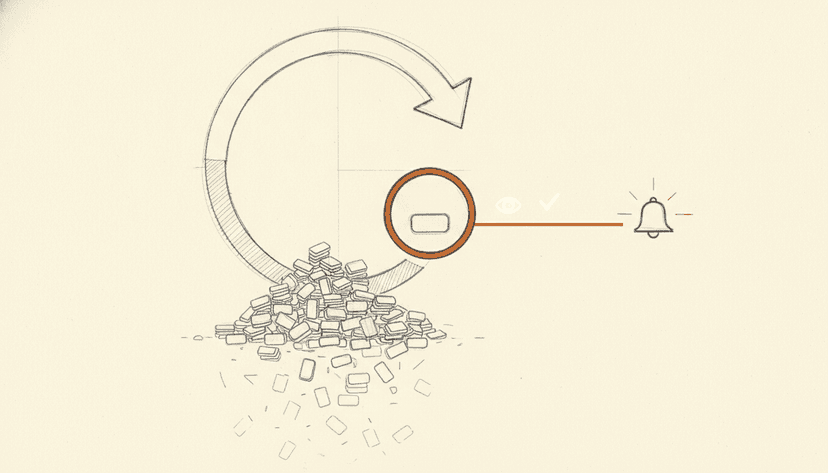
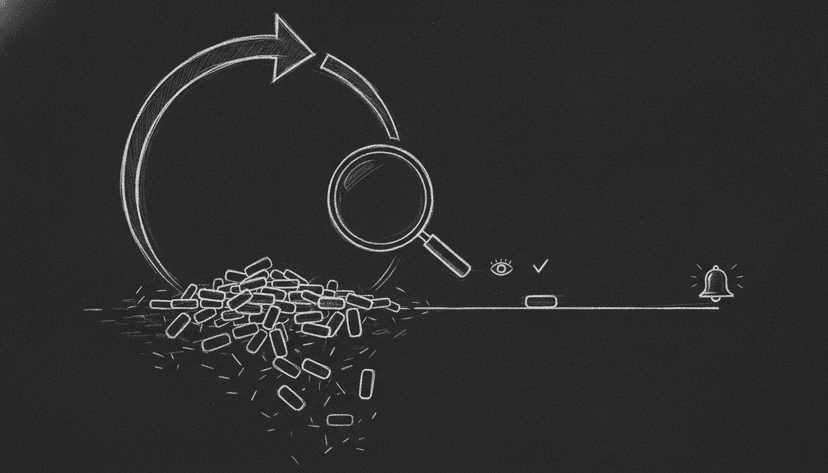
Context rot is an ongoing operational problem, not a one-time fix. As your system evolves, as conversation lengths grow, as your retrieval corpus expands, pressure will build again. The metrics to watch: average input token count by task type, quality score by input length bucket, noise ratio on retrieved chunks. Set alerts. Review monthly.
The pattern I kept seeing in healthcare AI — and I suspect it generalizes — is that teams invest heavily in model selection, prompt engineering, and retrieval architecture, then deploy and consider the context problem solved. But context quality degrades as a system ages. The demo ran on clean data. Production runs on everything.
If your LLM system is underperforming and you can't find the bug, stop looking at the model and start reading what you're feeding it. The answer is usually there.