Mostly about building products, healthcare tech, and lessons learned along the way.
Loading articles
Multi-Agent Orchestration in Practice: What I Learned Building Parallel Agent Systems | Clint Johnson
Multi-Agent Orchestration in Practice: What I Learned Building Parallel Agent Systems
The coordination pattern that scales — and where it breaks
The first time I ran a truly multi-agent system — not a chain, not a router, but a real orchestrator that spawned independent workers and aggregated their outputs — I sat there waiting for it to fall apart. It didn't. Twelve separate tasks executed in parallel, results came back, a synthesis agent combined them into something coherent, and the whole thing ran in a fraction of the time a sequential approach would have taken. I remember thinking: this is the architecture shift. Everything before this was just prompting.
That was about eight months ago. Since then I've built enough of these systems — mostly in healthcare AI — that I've developed real opinions about what works, what doesn't, and what will quietly destroy you if you're not watching.
What Multi-Agent Actually Means
There's a lot of loose language around agents. Let me be specific.
A single agent is a model with tools and a goal. It reasons, takes actions, observes results, and iterates. Useful, but bounded by sequential execution and a single context window.
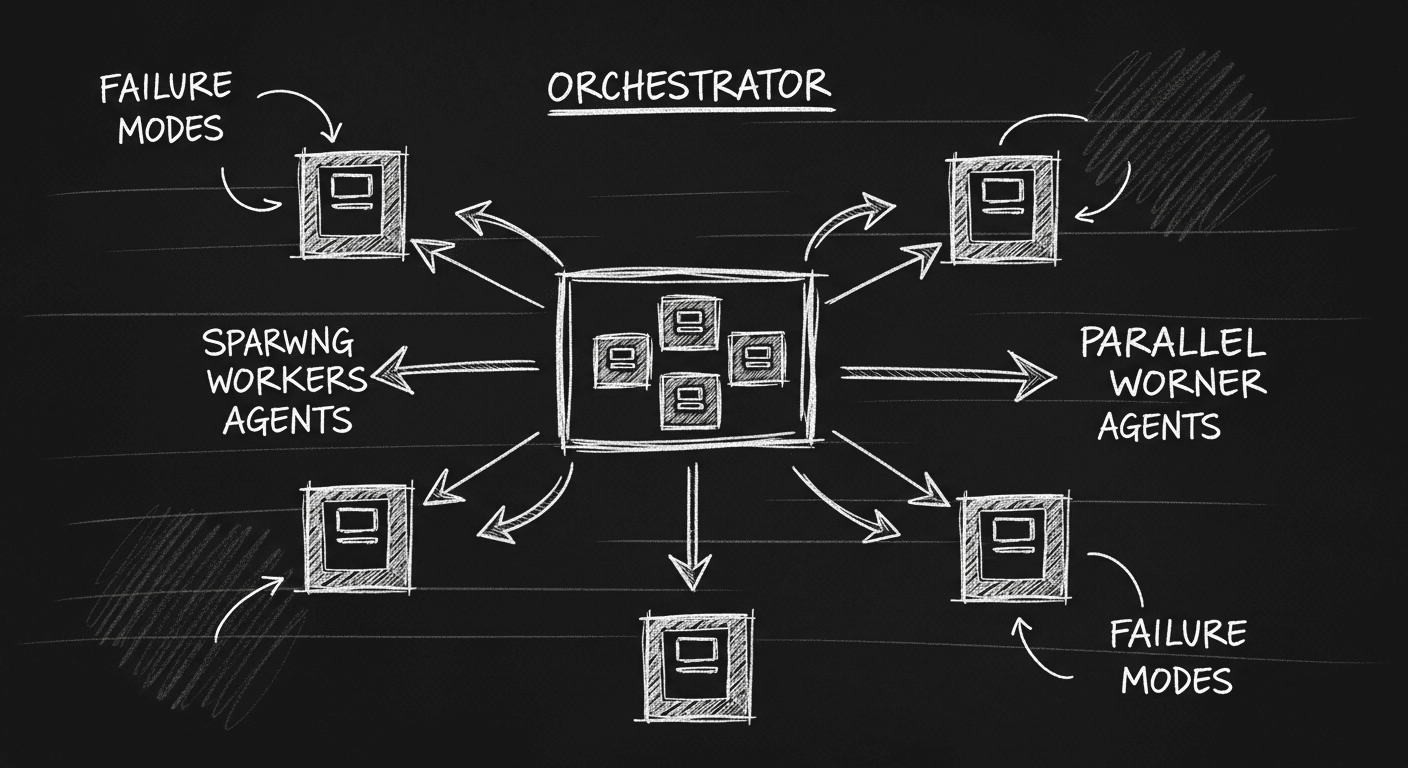
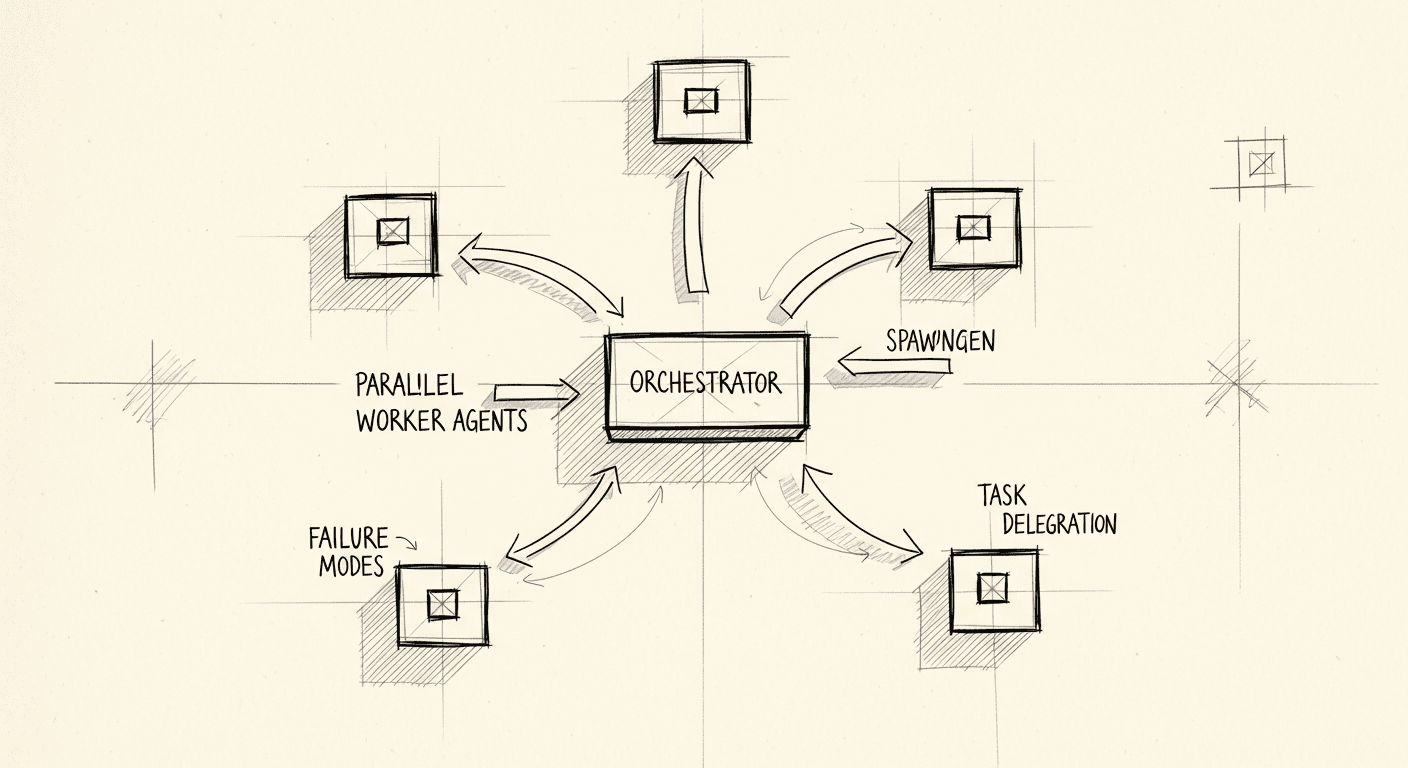
A multi-agent system is a graph of agents. Some are orchestrators — they don't do the domain work themselves, they decompose tasks, assign work to specialized workers, and synthesize results. Others are workers — they have a narrow scope, deep tool access for that scope, and no awareness of the broader task.
The mental model that matters: orchestrators think, workers do. An orchestrator should never be doing the actual data retrieval or domain-specific reasoning. Its job is coordination — task decomposition, worker dispatch, result aggregation, and error handling. When you blur this line, everything gets harder.
The Orchestrator/Worker Pattern
Here's how I structure every orchestrator I build.
I help teams ship AI in production — audits, consulting, custom agents, and eval systems. Start with an AI Audit (from $5k) for an honest read on what to build.
Task decomposition first. Before spawning anything, the orchestrator takes the top-level goal and breaks it into independent sub-tasks. Independent is the key word. If sub-tasks have dependencies on each other's outputs, you either need to sequence them explicitly or you have a more complex DAG that needs careful design. Start with tasks that can truly run in parallel.
Worker dispatch with bounded context. Each worker gets exactly what it needs and nothing more. A worker agent should receive: its specific task, the tools it has access to, and any shared context it needs from the orchestrator. It shouldn't receive the full conversation history, the outputs of other workers, or the high-level goal. Keep the worker's context clean. Context pollution — feeding workers information they don't need — is one of the most common failure modes I've seen.
Result aggregation as a separate concern. Don't let your orchestrator try to use raw worker outputs. Route them through an aggregation step — sometimes another agent, sometimes a structured merge — before synthesis. Raw outputs from specialized workers are often verbose, domain-specific, and structured for machine consumption, not for the next reasoning step.
Failure handling at every layer. Workers get stuck. They time out. They return malformed outputs. Your orchestrator needs explicit handling for all of these — not just a try/catch, but actual retry logic, fallback behavior, and the ability to degrade gracefully when a worker fails.
A Real Example: Clinical Data Orchestration
The clearest way I can illustrate this is with a system I built for clinical data summarization in a healthcare context. The goal: given a patient encounter, synthesize a structured clinical summary from multiple data streams — lab results, active medications, clinical notes, and vital signs.
A sequential approach would query each data type in order, which is slow and fails badly if any single query fails. The multi-agent approach is more interesting.
The orchestrator receives the patient identifier and encounter context. It decomposes the task into four parallel sub-tasks — one per data type — and dispatches to four specialized worker agents simultaneously.
The labs worker has tools to query the lab results database, understands reference ranges, flags abnormals, and returns a structured summary of clinically significant findings.
The medications worker has access to the medication administration record, knows how to identify active vs. discontinued meds, and flags interactions worth surfacing.
The notes worker is probably the most complex — it runs a retrieval pipeline over unstructured clinical notes using an embedding search, then summarizes the top passages relevant to the current encounter.
The vitals worker queries the time-series vitals store, computes trends over the encounter window, and returns structured data with any outliers flagged.
These four workers run concurrently via MCP tool calls from the orchestrator. The orchestrator waits for all four to complete (with a timeout and individual retry budget for each), then passes the structured outputs to a synthesis agent that produces the final clinical summary.
The results are better than any single-agent approach I tried. The specialized workers are sharper because their context is focused. The synthesis agent has clean, structured input instead of raw database results. The whole thing runs in about 15 seconds instead of the 40+ seconds a sequential version needed.
The Patterns That Actually Work
Parallel over sequential by default. The mental overhead of reasoning about parallel execution is real, but the performance gains are significant enough that you should always start by asking: what here is actually sequential? Most tasks have more parallelism than you think.
MCP for tool access. Using the Model Context Protocol to expose domain tools to worker agents is the right abstraction. It keeps tool definitions consistent, makes it easy to add new tools without changing the agent logic, and gives you a clean audit trail of what tools were called and with what arguments.
Structured output contracts. Define what each worker returns before you build it. TypeScript interfaces, JSON Schema, Pydantic models — whatever fits your stack. Workers that return unstructured text are a tax on every downstream step that has to parse them. Workers with structured output contracts compose cleanly.
tmux + worktrees for development. When building and debugging multi-agent systems, running agents in separate tmux panes against isolated git worktrees is the most practical setup I've found. You can see what each agent is doing in real time, kill and restart individual workers without touching others, and maintain a clean separation between the orchestration logic you're testing and the environment each worker sees.
What Can Go Wrong
Honest list, in roughly descending order of frequency.
Workers getting stuck. This is the most common failure mode. A worker makes an external call, something downstream is slow or unavailable, and the worker hangs. Your orchestrator needs explicit timeouts — not just at the network level, but at the task level. If a worker hasn't returned in N seconds, cancel it and invoke your fallback behavior.
Context pollution. I mentioned this above but it deserves emphasis. It's tempting to give workers more context because more context feels safer. It isn't. A notes worker that also receives raw lab values is now doing two jobs with one context, and it'll do both worse. Guard the context boundary for each worker aggressively.
Coordination overhead. For small tasks, a single agent is faster than an orchestrator + workers. The overhead of task decomposition, worker dispatch, result aggregation, and synthesis is real. Multi-agent systems earn their keep on tasks with genuine parallelism or tasks where specialized context isolation produces meaningfully better outputs. Don't reach for this pattern when a well-prompted single agent is sufficient.
Aggregation ambiguity. When workers produce conflicting outputs — one flags a lab value as critical, the synthesis agent receives it alongside a notes summary that doesn't mention it — the aggregation step has to handle the conflict explicitly. If you don't design for this, the synthesis agent will paper over it, often in ways that matter in production. In healthcare, this isn't theoretical.
Result ordering assumptions. Workers finish in non-deterministic order. Your aggregation step needs to be order-independent. If your synthesis prompt assumes labs come first, you've introduced a fragile dependency that will fail unpredictably.
The Lessons
Build the orchestrator first with stub workers. Get the coordination logic right — task decomposition, dispatch, timeout handling, aggregation — before you invest in the domain logic of individual workers. The orchestrator is the hard part.
Keep your worker scope ruthlessly narrow. If a worker is doing two meaningfully different things, split it into two workers. The performance cost is negligible. The quality gain is real.
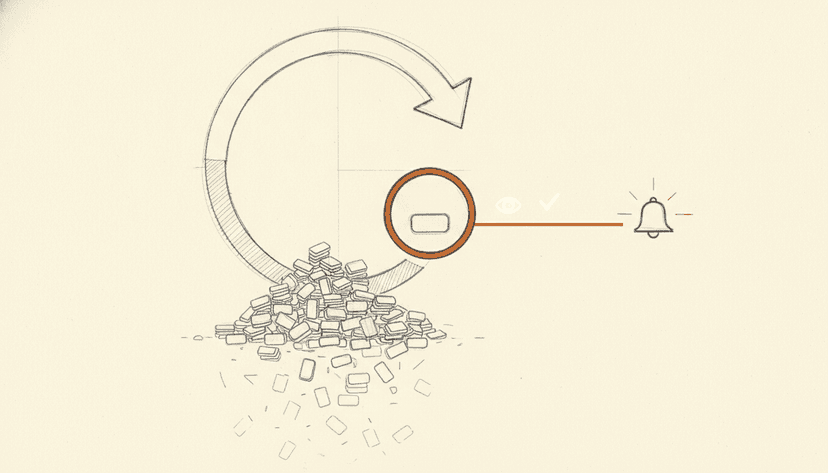
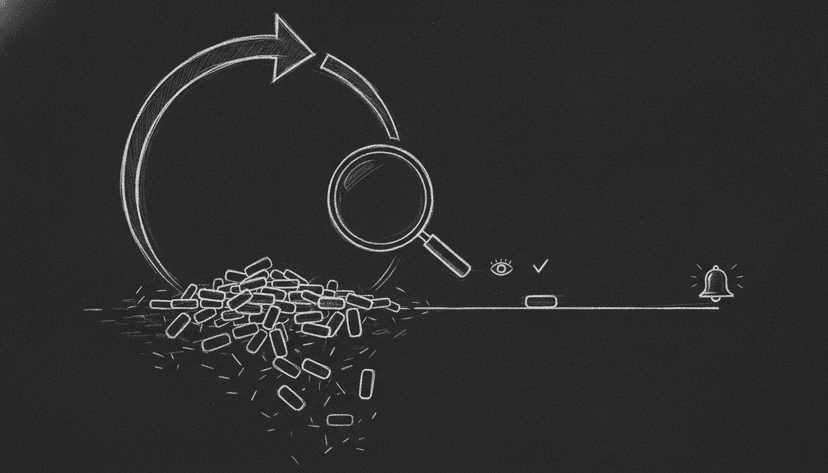
Instrument everything. You need to know: which workers were spawned, what inputs they received, how long they ran, what they returned, and how the synthesis step used their outputs. Without this, debugging production failures is guesswork.
Test failure modes deliberately. Kill workers mid-execution. Inject malformed outputs. Introduce artificial timeouts. The failure cases for multi-agent systems aren't the same as for single-agent systems, and they're easy to miss if you only test the happy path.
The architecture is powerful. When I got back those twelve parallel results that first time, something clicked — not just about performance, but about what it means to build systems where specialization and coordination are first-class concerns. That's the shift. Once you see it, going back to sequential chains feels like giving something up.