Mostly about building products, healthcare tech, and lessons learned along the way.
Loading articles
The Self-Healing Stack: What AI-Native Infrastructure Actually Means | Clint Johnson
The Self-Healing Stack: What AI-Native Infrastructure Actually Means
The infrastructure that fixes itself — almost
It was 2:47 AM. A memory leak in a Node.js service had been quietly accumulating for six hours before it finally took down a pod in our healthcare data pipeline. By the time the alert fired, two downstream jobs had failed silently and a batch of clinical records was stuck in a processing queue. I spent the next two hours manually restarting containers, checking logs, rerunning jobs, and verifying data integrity. In retrospect, a sufficiently aware system should have caught all of it before I ever got the page.
Why am I the loop-closing mechanism here?
That question has a real answer now. The AI Cloud vision: infrastructure that doesn't just scale automatically but monitors, optimizes, secures, and repairs itself. Developers declare what they want and AI agents handle the how, including the 2:47 AM how. It's a compelling framing, and it's simultaneously more real than most people realize and further away than the headlines suggest.
Here's my honest read of where this stands.
What "AI Cloud" Actually Means
Start with what came before it. Framework-defined Infrastructure (FdI), the model Vercel pioneered with Next.js, abstracts container orchestration behind declarative configuration. You describe your application, the framework figures out routing, caching, edge behavior, and deployment topology. The infrastructure becomes a compiler output, not a manual construction.
The AI Cloud extends this abstraction upward. If FdI is a compiler, the AI Cloud adds a runtime that watches the output, learns from it, and rewrites it when conditions change. Automated CI/CD pipelines that don't just run tests but interpret failures. Optimization loops that observe traffic patterns and reshape resource allocation in real time. Security posture that responds to anomaly signals without waiting for a human to read a dashboard. Declarative specifications with AI agents that close the gap between what you said you wanted and what the system is actually doing.
The key conceptual shift: from infrastructure as static configuration to infrastructure as a continuous optimization target. You stop maintaining a system and start maintaining a specification. The system maintains itself against that specification.
That's the vision. Now let's talk about what exists.
What's Actually Real Today
More than you might think. But it's fragmented, and none of it is seamless.
Auto-scaling is the most mature piece. Cloud providers have been doing reactive scaling for a decade. Modern platforms like Vercel, Fly.io, and AWS have pushed this further with predictive scaling that uses historical traffic patterns to provision ahead of demand spikes rather than reacting after the fact. This is real self-healing behavior for the specific failure mode of under-provisioning.
I help teams ship AI in production — audits, consulting, custom agents, and eval systems. Start with an AI Audit (from $5k) for an honest read on what to build.
Automated rollbacks are production-grade at the platform level. Vercel's deployment model is the clearest example: every deployment is immutable, traffic shifts are gradual, and rollback is instantaneous. If error rates spike after a deploy, the platform can revert without human intervention. This is narrow self-healing, it catches "this deploy broke something," but it works reliably and saves real incidents.
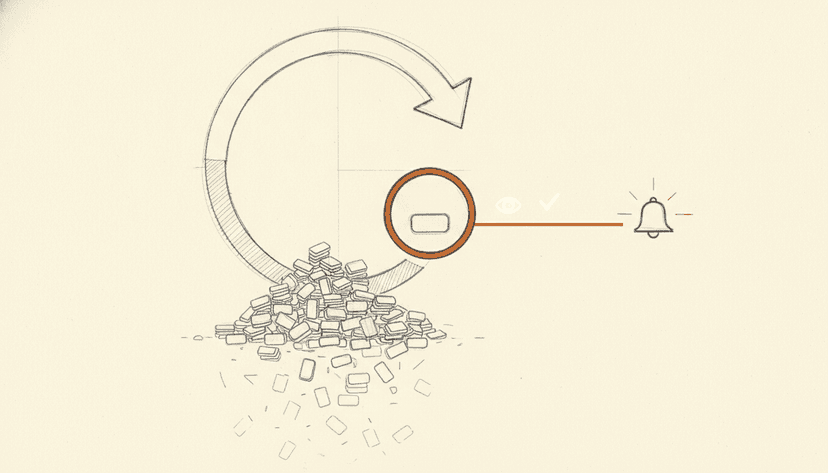
Anomaly detection and alerting has gotten genuinely better. Datadog, Honeycomb, and similar tools now ship ML-driven anomaly detection that surfaces signals a static threshold would miss. What they don't yet do is close the loop. They alert a human, who then decides what to do. The detection is AI-assisted; the remediation is still manual.
Infrastructure-as-code with AI assistance is early but real. Tools like Pulumi AI and Terraform with Copilot integration can generate reasonable IaC from natural language descriptions. The output still requires expert review, these tools hallucinate IAM policies and get network topology wrong in interesting ways, but the direction is clear.
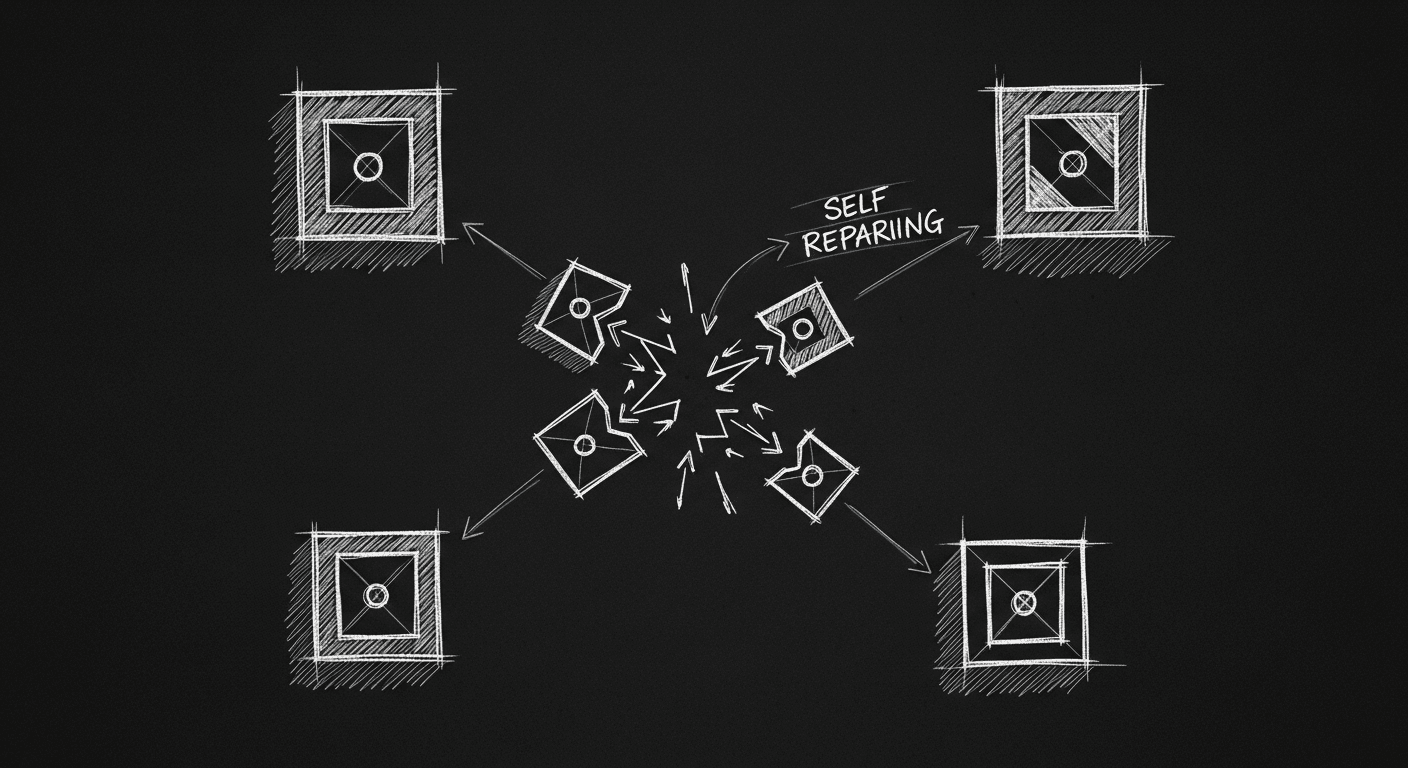
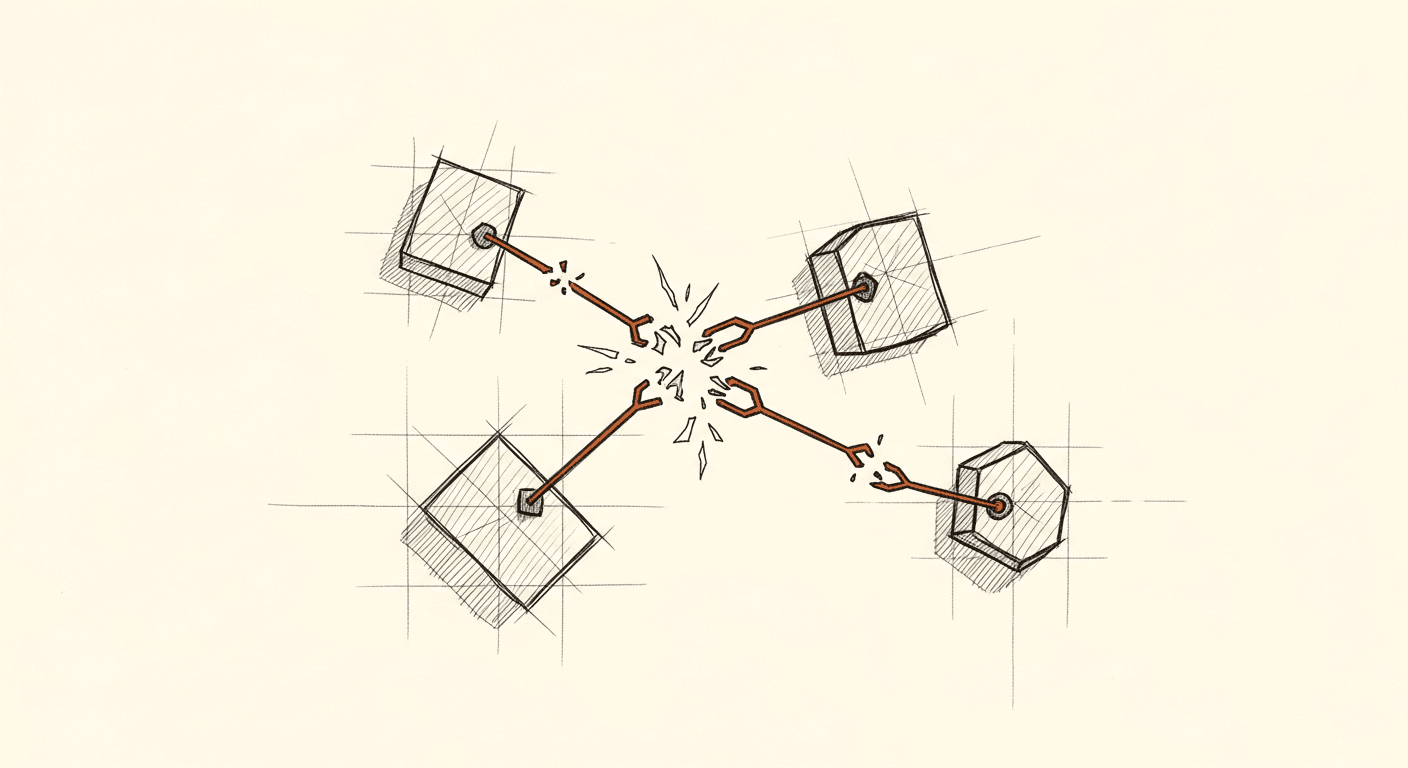
The pattern: self-healing exists in specific, well-bounded domains. It doesn't yet compose. My 2:47 AM incident involved a memory leak, a pod restart, a failed batch job, and a data integrity check, four separate domains that each had some automation, none of which talked to each other. The gap between "things get fixed automatically sometimes" and "the system repairs itself end-to-end" is still enormous.
What's Genuinely Coming
I'm more bullish on the next two to three years than I would have been twelve months ago. The reason: the agent layer is becoming production-grade.
The hard part of self-healing infrastructure isn't detection or even diagnosis. It's remediation: taking a correct action against a live system, with appropriate confidence about what "correct" means. That requires an agent that can reason about system state, execute against real APIs, verify outcomes, and know when to stop and escalate. Until recently, that was out of reach. It's becoming tractable.
A few things I expect to see become standard:
Closed-loop remediation for known failure classes. Memory leaks, zombie processes, stale cache invalidation, mis-scaled worker pools: these are well-understood failure modes with well-understood remediation steps. AI agents with read/write access to infrastructure APIs and a library of validated remediation playbooks will handle these autonomously. The economics make this inevitable. The cost of a 2:47 AM page is high, and the remediation for a memory leak is not complex.
AI-driven deployment optimization. Not just rollback when things break, but continuous optimization of deployment configuration, cache headers, edge routing rules, resource limits, based on observed performance. Vercel is the most likely place this shows up first. The model is already there in simplified form with their Analytics-to-optimization pipeline.
Security posture as a continuous feedback loop. Static security scanning in CI is table stakes. What's coming is runtime behavioral analysis that detects anomalous API access patterns, triggers automated credential rotation, and isolates affected services, all before a human reads the alert. Startups like Wiz are moving in this direction; it'll be table stakes in three years.
Specification drift detection. Your infrastructure drifts from your declared intent over time: manual hotfixes, configuration changes made in a panic at 2 AM, dependency updates with behavior changes. AI agents that continuously compare running state against declared specification and surface or resolve the drift are a natural extension of IaC tooling. This is technically feasible today; it's an adoption problem, not an engineering one.
What I don't expect in that timeframe: fully autonomous infrastructure management for complex, stateful, multi-system architectures. The failure modes are too varied, the blast radius of a wrong remediation action is too high, and the training data for "correct behavior in this specific production environment" doesn't exist at training time. AI Cloud is real. AI Cloud as a fully autonomous ops replacement is aspirational for at least another five years.
What Engineers Should Actually Do About This
Prepare for the shift without betting your career on a timeline.
Design for observability as a first principle, not an afterthought. Self-healing systems need rich signal to act on. If your services don't emit structured logs, distributed traces, and meaningful metrics, no AI layer can reason about their state. The teams that benefit first from AI-driven infrastructure will be the ones that already have excellent observability. If your observability is poor today, fix it regardless of the AI Cloud timeline. It makes you better at debugging now and positions you for what's coming.
Learn to write declarative specifications, not procedural infrastructure. The shift is fundamentally about moving from "here are the steps" to "here is the desired state." Engineers who think in desired state, who reach for Kubernetes declarative configs, Pulumi component abstractions, and policy-as-code over shell scripts and click-ops, will adapt more naturally to the AI Cloud model than those who don't.
Treat your runbooks as training data. Every incident postmortem, every documented remediation step, every architecture decision record is a signal that future AI systems will use to understand your system's intended behavior. Teams that document well, not because they were told to but because they care about institutional knowledge, are building the corpus that autonomous remediation agents will need. Write as if an intelligent system will read it. Because eventually, one will.
Stay close to the platforms moving fastest. Vercel, Fly.io, Railway: these platforms are collapsing the distance between application code and infrastructure. The AI Cloud capabilities will show up there first, before they surface in enterprise AWS or GCP. If you're building new things, bias toward platforms where the abstractions are moving, not the ones where they're stable.
Don't abstract yourself out of understanding. The engineers who will thrive in an AI Cloud world are not the ones who don't understand infrastructure. They're the ones who understand it deeply enough to specify, verify, and debug what the AI layer produces. Abstraction raises the floor; it doesn't eliminate the need for expertise. The ceiling gets higher, not lower.
The Honest Verdict
The self-healing stack is not science fiction. Parts of it are running in production today. The AI Cloud vision is directionally right: the trajectory from FdI to AI Cloud is the natural extension of a decade of increasing abstraction.
But it's not here yet, and the gap between "automated rollbacks plus anomaly detection" and "the system repairs itself at 2:47 AM so you don't have to" is still measured in years of engineering work. The companies building toward this are Vercel, the major cloud providers, and a growing number of infrastructure startups with serious ML talent.
The right move is to build with the grain of what's coming: observable systems, declarative configurations, documented behavior, and a clear understanding of where automation is trustworthy and where a human still needs to be in the loop.
The 2:47 AM incidents will keep happening. But the trajectory is clear, and the engineers who understand what they're being automated toward will fare a lot better than the ones who are surprised when the system starts closing its own loops.