Mostly about building products, healthcare tech, and lessons learned along the way.
Loading articles
Inside the Black Box: What Mechanistic Interpretability Means for Builders | Clint Johnson
Inside the Black Box: What Mechanistic Interpretability Means for Builders
Opening the black box — what practitioners can actually do today
A few years ago I was presenting a clinical decision support prototype to a compliance officer at a health system. The model was flagging patients at elevated risk for a specific readmission pattern. Accuracy was solid. The demo went well until she asked a simple question: "Why did it flag this patient and not that one?"
I didn't have a good answer. I could describe the features the model was trained on. I could show her the training data distribution. What I couldn't do was point at a specific part of the model and say: this is the mechanism that made this call, and here is why it is reliable enough to trust in a clinical workflow.
She passed on the pilot.
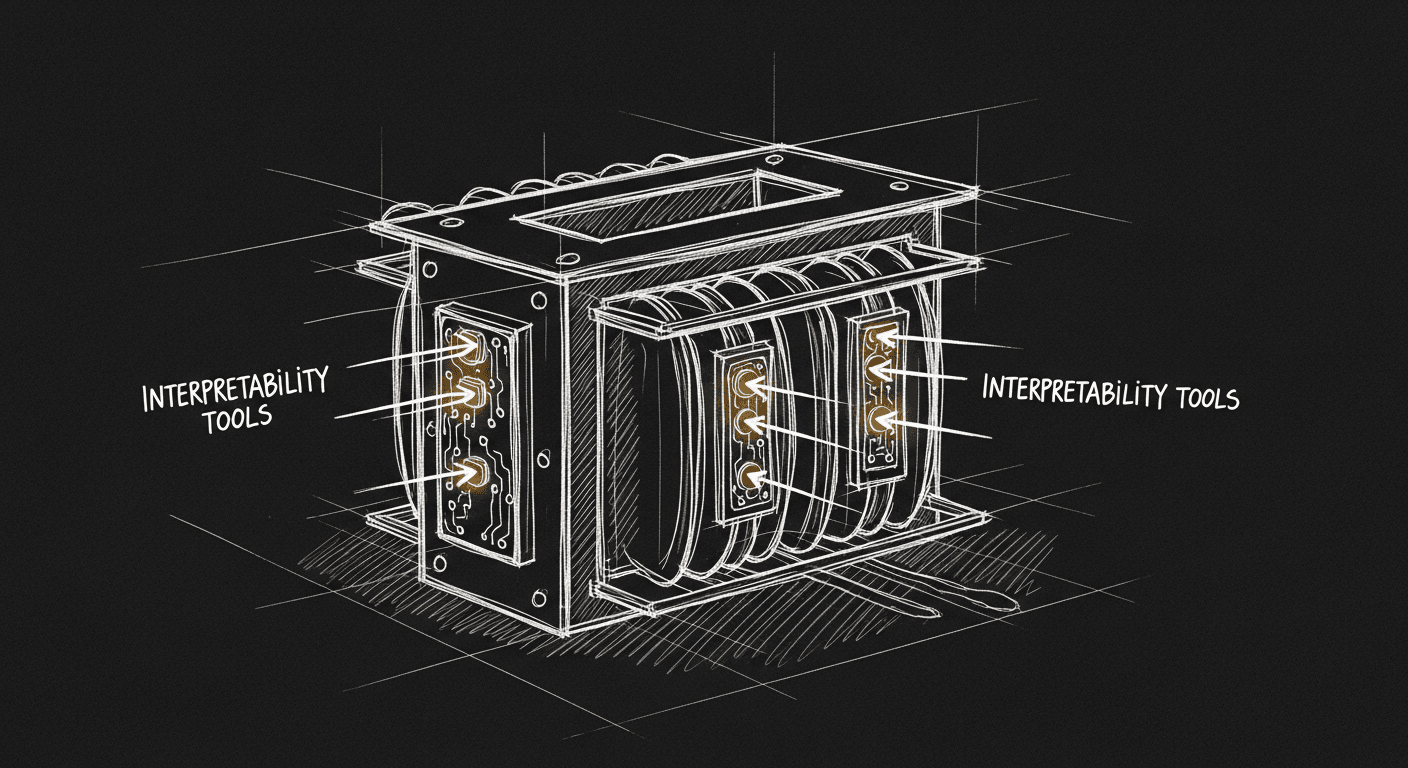
That meeting is why I follow mechanistic interpretability research closely. Not because I think it solves the problem today — it doesn't — but because it's the field working on the right question. A recent paper from Berkeley AI Research on SPEX, a system for scaling interaction discovery across thousands of model components, is the clearest signal yet that this work is maturing in ways that matter for practitioners.
Why Interpretability Is Not Optional in Healthcare
The standard framing in AI product circles is that interpretability is a nice-to-have — good for trust, helpful for debugging, but not load-bearing. That framing doesn't hold in regulated industries.
In clinical contexts, a treatment decision needs a rationale. Not because regulators are being difficult, but because the rationale is how you catch errors before they reach patients. A clinician who can't evaluate why a recommendation was made can't exercise the professional judgment they're legally and ethically required to exercise. "The model said so" isn't a rationale. It's an abdication.
This is the actual problem mechanistic interpretability is working on: not making AI outputs legible to end users, but making the internal decision process of neural networks legible to anyone at all. That's a fundamentally harder problem than generating explanations after the fact, which is what most explainability tooling does today.
The distinction matters. Post-hoc explanations — SHAP values, LIME, attention visualization — describe correlations between inputs and outputs. They tell you what the model attended to. They don't tell you what the model is actually doing when it produces an output. Mechanistic interpretability is trying to understand the actual computation.
I help teams ship AI in production — audits, consulting, custom agents, and eval systems. Start with an AI Audit (from $5k) for an honest read on what to build.
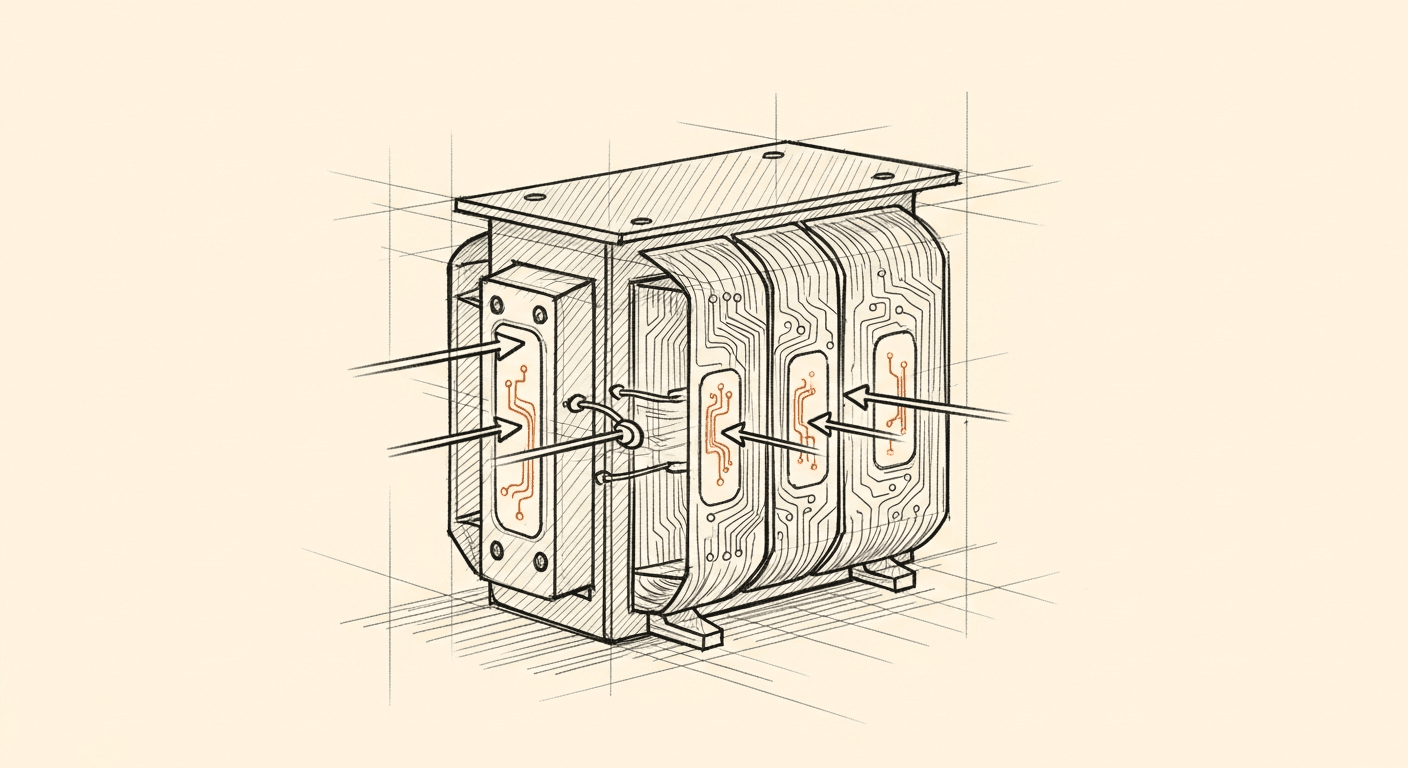
The field is built on a core question: can we reverse-engineer a trained neural network the way a reverse engineer might analyze compiled software — finding the actual algorithms and data structures, not just observing input-output behavior?
The early work identified individual neurons or small circuits in transformer models that reliably activate for specific concepts: sentiment, syntax, factual associations. Researchers found that models develop internal representations that aren't arbitrary. They're structured, composable, and sometimes remarkably human-interpretable. A model trained to predict next tokens develops something that looks like a grammar checker, a fact store, and a reasoning engine, all without being told to.
The hard part has been scaling. Those early circuit analyses were done on small models with dozens of components. Real production models have billions of parameters and hundreds of layers. Understanding one circuit in GPT-2 takes months. Understanding how GPT-4 makes any given decision is, today, not practically feasible.
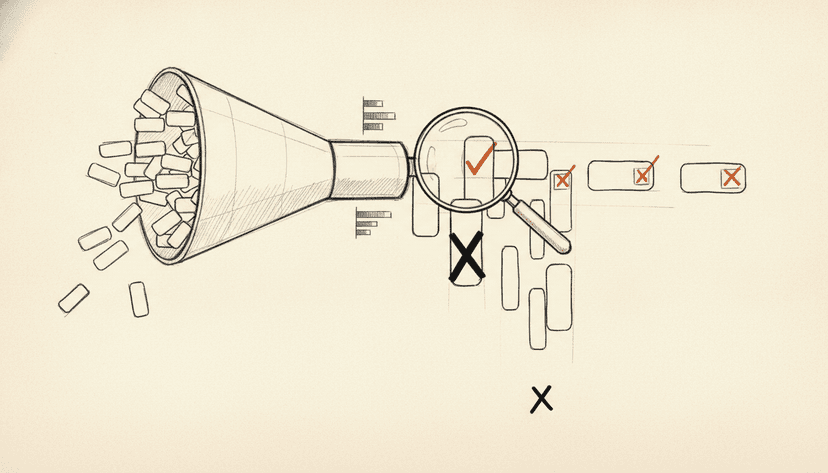
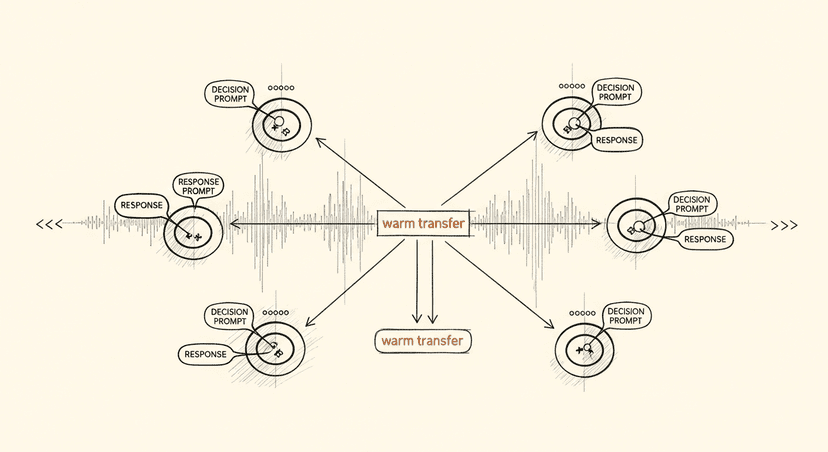
This is where SPEX is relevant. The Berkeley paper approaches interaction discovery — finding which model components are actually influencing each other in the course of generating an output — as a signal processing problem. Rather than testing component pairs one at a time, SPEX uses sparse recovery techniques borrowed from compressed sensing to find significant interactions across thousands of components simultaneously. The scale jump isn't incremental. It's the difference between manually tracing wires in a circuit board and running current through the whole board and reading which paths lit up.
Applied to LLMs, this means the field can now ask: when a model reasons through a multi-step problem, which attention heads are actually driving the intermediate steps? Which components interact in ways that matter versus which are bystanders? That's a tractable research question now in ways it wasn't a year ago.
What This Reveals About How Models Actually Work
The findings from mechanistic interpretability research are often surprising in ways that are directly relevant to practitioners.
Attention is not the same as reasoning. Early interpretations of transformer attention maps treated high attention weights as evidence of the model "using" an input. It's more complicated. Attention can be high on a token the model is effectively ignoring for the actual output generation, and components that barely register in attention maps can be driving critical computation downstream. What the model looks at and what it uses aren't the same thing.
Models encode knowledge redundantly. The same factual association can be stored in multiple locations across a model. This has a practical implication: when a model hallucinates a fact it should know, the failure is often not absence of knowledge but a routing problem. The right knowledge exists in the weights but didn't activate on this input. That's a different failure mode than knowledge gaps, and it suggests different mitigation strategies.
Components interact non-linearly at scale. This is the insight SPEX-type work surfaces at a level of detail not previously possible. When you ablate a component — zero it out and observe the effect — you often see a modest individual effect. But when multiple components are ablated together, the effect can be dramatically larger than the sum of parts. Components that individually seem unimportant can be jointly critical. Understanding which interaction clusters actually matter for specific task types is something the field is only beginning to map.
Feature attribution is partial. When you ask which input tokens most influenced an output, you get a real answer — but it's an answer about correlation, not causation. The gradient-based attribution methods most practitioners use today can tell you that the model was sensitive to a specific token, but they can't tell you through which internal pathway that sensitivity expressed itself. Mechanistic interpretability is building the tools to answer that second question.
The Gap Between Research and What You Can Use Today
I want to be direct here because the gap is real and practitioners deserve honesty about it.
Most mechanistic interpretability results today are generated on small models — GPT-2 scale, occasionally up to GPT-2 XL. The techniques scale poorly. What SPEX demonstrates is progress on the scaling problem, but the paper operates on controlled experimental conditions, not on production-scale models processing real clinical text. There's no toolbox today that a clinical AI team can install and run against a deployed GPT-4 or Claude model to get mechanistic explanations of individual outputs.
What you can do is materially better than a few years ago, and the trajectory is improving faster than most people realize.
Feature attribution at the input level is mature and useful. Tools that identify which parts of the input most influenced the output — whether via attention, integrated gradients, or perturbation-based methods — are practical, deployable, and informative. They don't answer the mechanistic question, but they answer a question clinicians can work with: "what did the model base this on?" That's enough for some regulatory contexts.
Component ablation at the output level is increasingly accessible. If you're working with open-weight models, you can run structured ablation studies: systematically remove or modify components and measure the effect on output distributions for specific task types. This isn't mechanistic interpretability in the rigorous sense, but it gives you empirical evidence about which parts of the model are doing the work for your use case.
Probing classifiers let you ask whether specific information is encoded in the model's intermediate representations at different layers. If you want to know whether a clinical model has correctly encoded the distinction between a current medication and a historical one before generating a summary, you can train a lightweight probe on the layer activations and test it. This is standard research technique that product teams almost never apply, and it provides genuine evidence about what's inside the model.
Attention patterns with appropriate skepticism are still informative, just not in the naive way they were originally interpreted. High attention to specific clinical terms across consistent input types is a signal worth tracking — not as proof of mechanism, but as a behavioral signature you can monitor for drift.
What I Actually Do Differently Because of This
Three things changed in how I build clinical AI systems because of mechanistic interpretability research:
I treat the model as an unknown artifact, not a reliable tool. A trained model isn't a system I built. It's a system I found. I don't know its internal decision process any more than I know the internal decision process of a clinician I hired. What I can do — what I should do — is build empirical evidence about when it's reliable, what inputs push it toward failure, and how its behavior changes across distribution shifts. That reframe changes how I instrument systems and what I look for in production monitoring.
I invest in lightweight behavioral probing before deployment. Before any clinical AI feature ships, I now run a structured set of inputs designed to probe specific capabilities the feature depends on. Not a standard benchmark. A domain-specific probe built around the failure modes I identified in manual review. This doesn't give me mechanistic insight, but it gives me behavioral evidence that correlates with the mechanistic questions I can't yet answer directly.
I build explainability layers that are honest about what they are. The mistake I see teams make is building post-hoc explanation systems that present correlational evidence as if it were causal. A SHAP visualization that shows token attribution isn't showing you why the model made the decision. It's showing you which inputs the output was sensitive to. I label outputs accordingly. Clinicians can work with "the model flagged this note because these sections had the highest influence on the risk score" — as long as I'm clear that this is a correlation finding, not a proof of mechanism.
Where This Is Going
The SPEX paper represents something I watch for specifically: techniques that make the scaling problem tractable without requiring full enumeration. Signal processing approaches, sparse recovery, compressed sensing applied to model internals — these are the methods that can eventually bring mechanistic analysis to production-scale models. That's not this year, possibly not next year, but it's a more credible trajectory than it was two years ago.
The compliance officer who passed on my pilot wasn't wrong to ask for an explanation. She was right. The AI research community is working on the infrastructure to actually answer her question. In the meantime, practitioners in regulated industries need to be honest about what they have — behavioral evidence, input attribution, empirical reliability studies — and resist the temptation to oversell it as mechanistic understanding.
The inside of these models isn't random. It's structured, reversible, and increasingly legible to researchers with the right tools. We're not there yet for production clinical AI. The field is moving, and the practitioners who understand what's coming will be better positioned to build for the world that's arriving.
The compliance officer asked the right question. The answer is getting closer.