When English Became a Programming Language
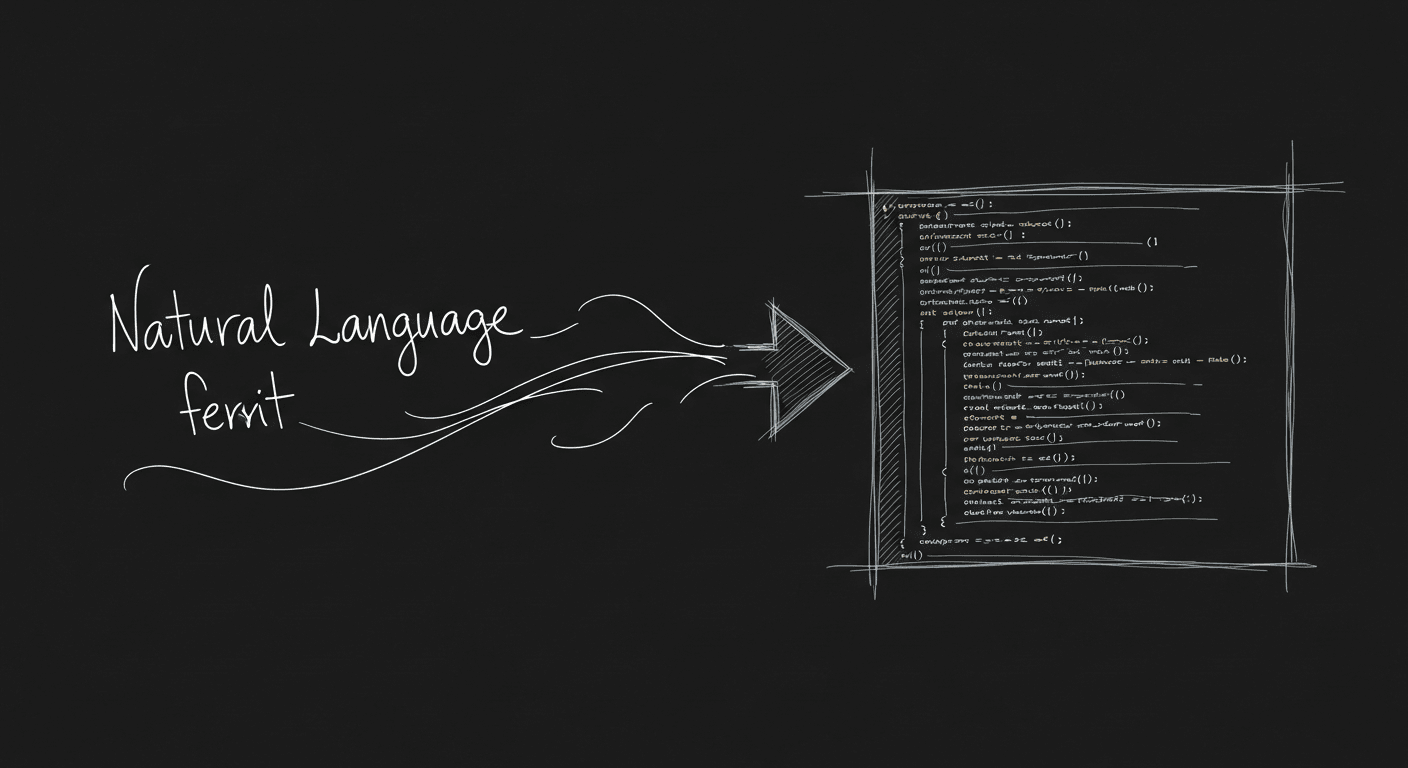
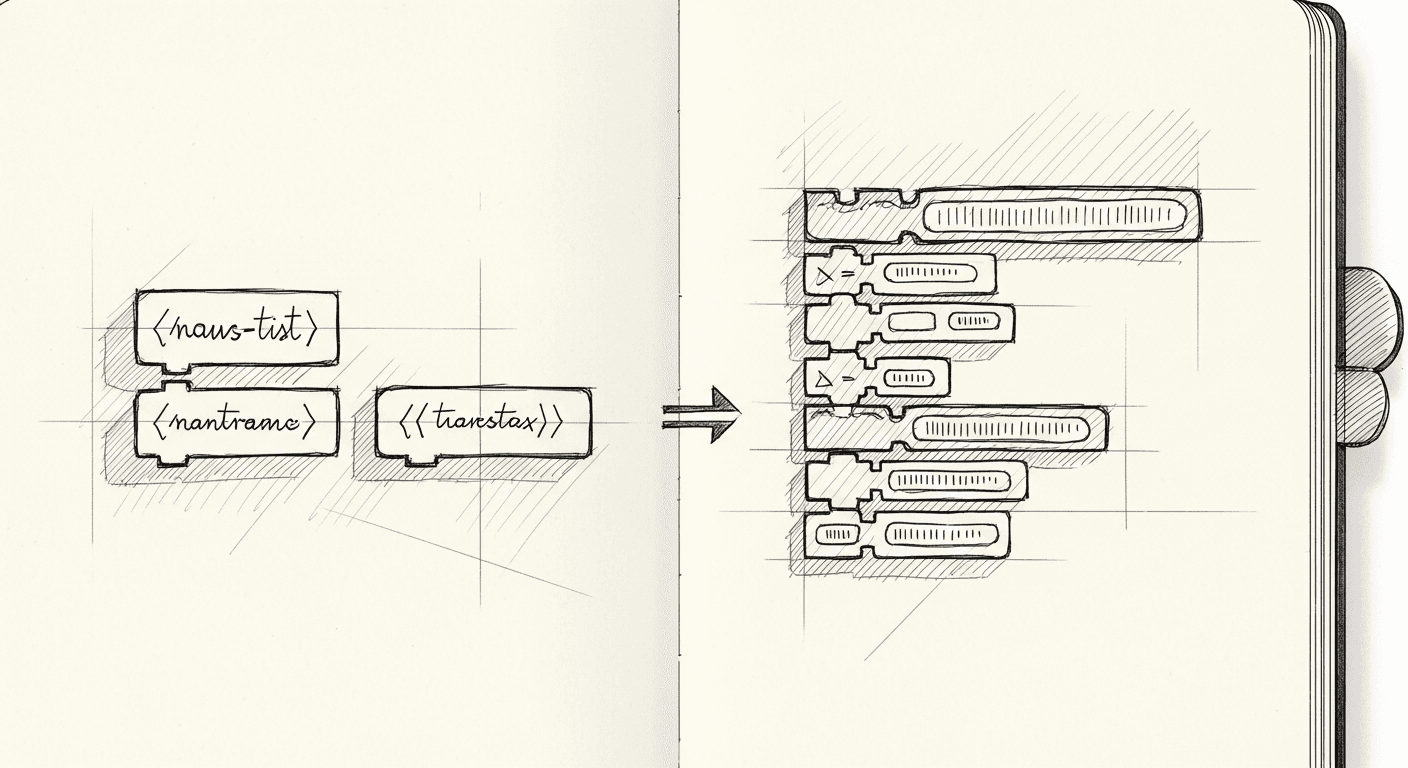
Sketch of English instructions flowing into executable code structure

The gap between English and machine is closing faster than anyone expected

Last month I described a dashboard feature to Claude Code in plain English. Described the layout, the filters, the data shape I wanted. Twelve minutes later I had working React and a Postgres query. Not a prototype — production-ready code.

I've been building full-stack apps for twelve years. That moment should have felt like winning. Instead, it felt like the ground shifting.

The v0 Thesis Is Real

The thesis behind v0 is worth sitting with: English plus AI can replace traditional web development for 95% of applications. React and Tailwind become the assembly language. Description becomes the source code. The workflow is prompt, iterate, ship — no traditional coding required for most use cases.

My first instinct was to discount this. I've heard "coding is dead" since Stack Overflow launched. But I've now used v0, Cursor, and Claude Code extensively enough that I can't dismiss it. The thesis is directionally correct and it's moving faster than I expected.

Here's what that actually looks like in practice. I can describe a multi-step form with validation, dark mode support, and mobile-first layout in three sentences and get working, opinionated code back in seconds. I can say "add a skeleton loading state" and it happens. I can say "the spacing feels tight on mobile" and it adjusts. The iteration loop that used to take me 20 minutes now takes 90 seconds.

For the vast majority of UI work — dashboards, admin panels, marketing pages, CRUD interfaces, internal tools — this is not a marginal improvement. It's a categorical shift.

What Scared Me and What Doesn't

I'll be honest about where this lands emotionally. There's a version of this story where the skill I spent a decade building — the ability to architect clean React components, reason about state, design systems that scale — gets commoditized out from under me. And some of that is simply true.

The parts of my job that felt like craftsmanship two years ago? v0 can do most of them faster.

But here's what I've noticed when I push these tools into genuinely hard territory: they fall apart in specific, predictable ways.

Stateful complexity. Building a UI that displays data is easy. Building one that correctly manages optimistic updates, handles race conditions between three async operations, and gracefully degrades when an upstream service is slow — that's where AI-generated code becomes a starting point, not a finished product. The generated code is often superficially correct and subtly broken.

System design. When I describe a feature, I'm drawing on context that no prompt contains. I know which parts of our codebase are brittle. I know which API contracts are unreliable. I know that one service has a 200ms p99 that will make a particular design decision painful in three months. AI can generate the component. It can't make the architectural call that lives upstream of it.

Non-standard problems. Every codebase has its own gravity. The weird state machine in our golf handicap calculator. The healthcare data pipeline that has to satisfy two different compliance regimes simultaneously. The integration with a vendor who documented their API badly and implemented it worse. v0 is trained on the canonical. It doesn't know your particular weirdness, and your particular weirdness is often the hard part.

Debugging production behavior. An AI can look at code and reason about what it should do. It can't tell you why your error rate spiked at 2pm on Tuesday in a specific region for users on iOS 17 with a specific carrier. That's still detective work, and the detective still needs to know what they're looking for.

The New Skill Stack

The question isn't "will AI replace developers." It's already replacing significant chunks of what developers do. The useful question is: what's the new job description?

Here's what I think survives, and why:

Knowing what to build. This sounds obvious. It's not. Generating UI is easy. Knowing which UI to generate — what the user actually needs, what problem you're actually solving, how this feature interacts with the rest of the product — requires judgment that compounds over years. AI accelerates execution. It doesn't substitute for taste or product sense.

Context about your own system. The senior engineers I know who are most effective with AI tools are ones who can give precise context. Not "build me a user settings page" but "build me a user settings page that integrates with our existing auth context, follows our data-fetching patterns, and handles the edge case where a user has linked multiple OAuth providers." The more precisely you can describe the real constraints, the better the output. That precision requires deep knowledge of your own system.

Reading generated code critically. This is underrated. The ability to read code quickly and spot when it's subtly wrong — when the pagination is off by one, when the error handling is swallowing something it shouldn't, when the generated solution works in isolation but breaks when composed with the rest of the system — that's a skill, and it's more important now than it was before.

Knowing where the bodies are buried. Every non-trivial system has decisions baked in that aren't documented anywhere. Legacy behavior that something downstream depends on. A performance optimization that introduces a constraint somewhere else. The engineer who knows these things is harder to replace by an AI that can only see the code, not the history.

End-to-end accountability. AI generates code. Someone still needs to own the system. To field the 3am incident. To decide when good enough is good enough and when it isn't. To make calls when the requirements are ambiguous. That accountability doesn't have an AI equivalent yet.

The Uncomfortable Implication

If English is becoming the input to programming, then the ceiling for what one person can build is rising fast. A non-engineer with strong product instincts and good taste can now ship things that would have required a team two years ago. A solo developer can operate at team scale.

That's genuinely exciting. It's also a meaningful compression of entry-level engineering work. The UI scaffolding that used to be a junior engineer's ramp into a system — that work is increasingly automated. Junior engineers are going to need to clear a higher bar faster, and the bar is increasingly about judgment rather than mechanics.

For senior engineers the calculus is different but not comfortable. The skills that got you here aren't wrong, but their relative value has shifted. The parts of the job that were about knowing how to do things matter less. The parts that are about knowing what to do and why, about understanding systems deeply, about catching subtle failures — those matter more.

What I'm Actually Doing About It

I've stopped thinking about AI code generation as a tool and started treating it as a collaborator that's very fast, sometimes brilliant, occasionally confidently wrong, and ignorant of everything that's not in the prompt.

That framing changes how I work. I invest more time in the spec than I used to — being precise about constraints, edge cases, and non-obvious requirements before I start generating. I read generated code as carefully as I'd read a junior engineer's PR. I use AI to move fast on the well-understood parts and slow down on the parts where the real complexity lives.

The 12 years I spent learning to build things taught me, among other things, how to recognize when something is wrong before it fails. That's not something I got from a course. It came from building broken things, debugging them, and doing it again. That pattern recognition is what I bring now.

English is a programming language. The question is what kind of programmer you are when the language barrier drops.

The answer, as far as I can tell, is the same as it's always been: the ones who understand the problem deeply win. The tools change. The underlying job of building software that actually works, for real users, under real constraints, doesn't.

That's less comforting than it sounds, because it means the bar moved. But it also means twelve years of hard-won judgment didn't evaporate. It just became more important to spend it on the right things.