Mostly about building products, healthcare tech, and lessons learned along the way.
Loading articles
Every Failed AI Product Has the Same Root Cause | Clint Johnson
Every Failed AI Product Has the Same Root Cause
Every failed AI product has the same root cause
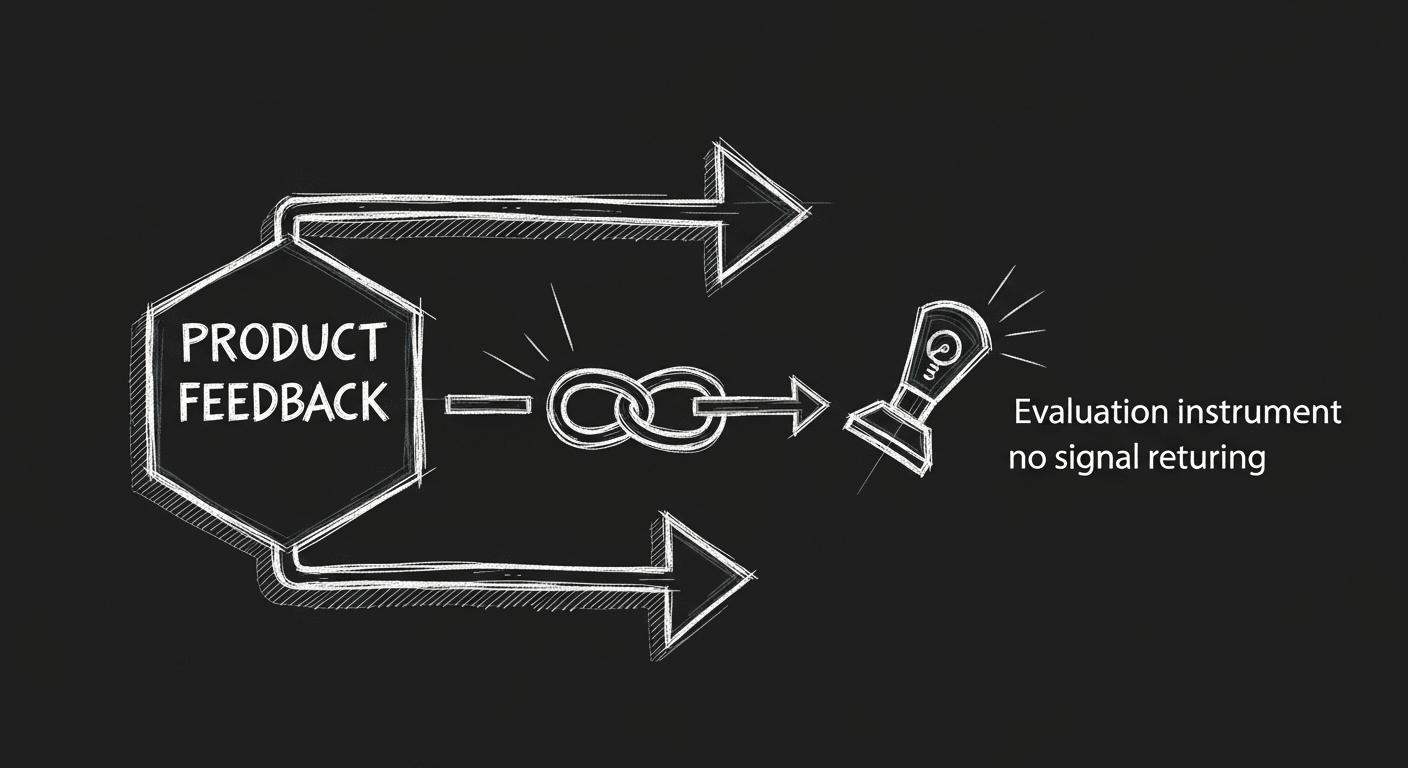
Every AI product that failed did so for the same reason: nobody built a system to know whether it was working.
That sounds almost too simple, so let me be specific. I've been building in ML and AI for twelve years: healthcare AI, golf AI, enterprise operations platforms. I've been part of teams that shipped products that failed. I've been brought in to consult on products that were already failing. When I map the failure signature across all of them, it's the same shape every time. Not a bad model. Not a wrong architecture choice. Not a lack of data. The root cause is always that the team had no rigorous, systematic way to evaluate whether the product was doing what it was supposed to do.
They were shipping blind and iterating on vibes.
What "Iterating on Vibes" Actually Looks Like
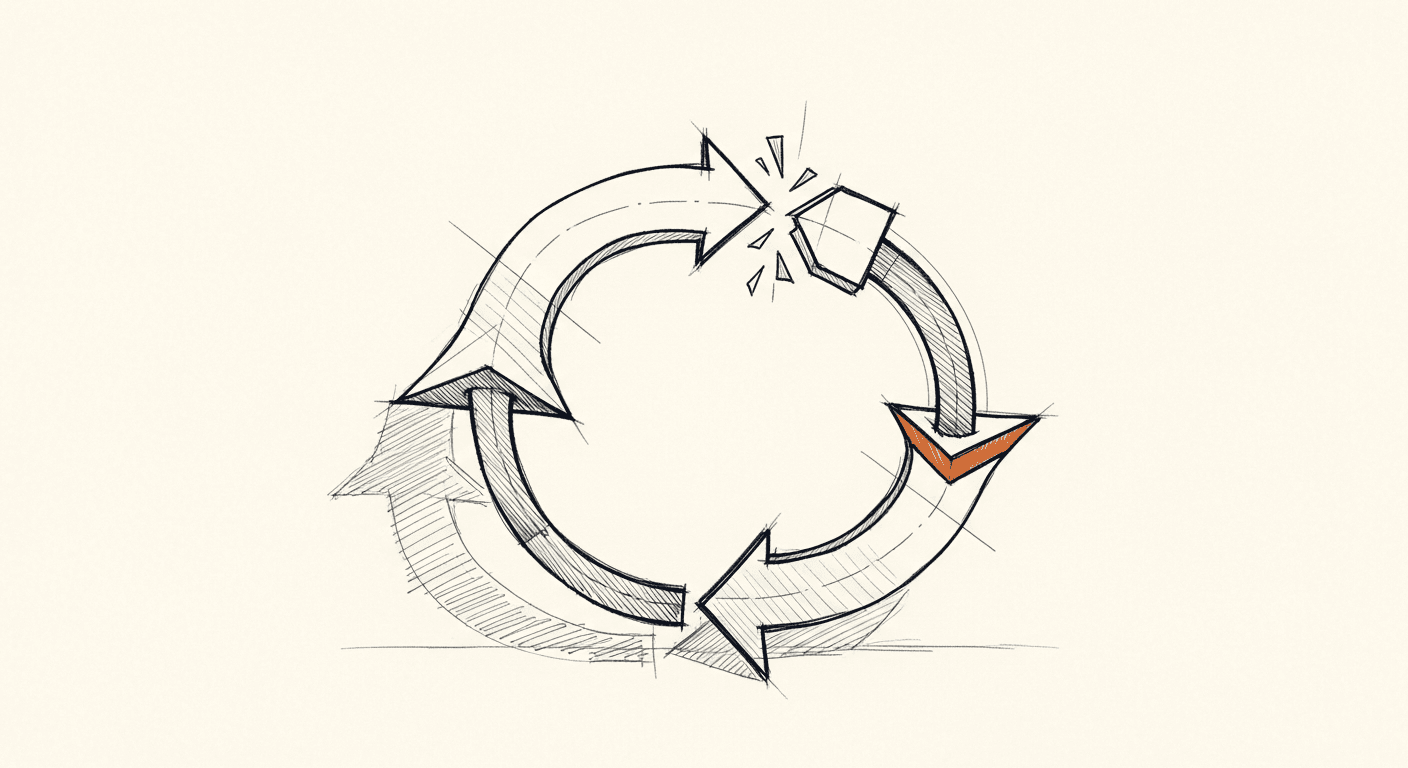
It looks like this: the team ships v1. A few users complain about a specific behavior. Someone on the team reproduces the complaint, tweaks the prompt or adjusts a parameter, and ships a fix. The complaint stops coming in. Everyone moves on. This cycle repeats for months.
The problem is not that they're responding to user feedback. That part is fine. The problem is that every change is made without knowing whether it improved things globally, degraded things globally, or just shifted the problem somewhere nobody was looking. You fix the thing the user complained about and silently regress five behaviors nobody noticed yet. Those regress something else. After six months of this, the product is a tangle of compensating patches and nobody can tell you with confidence what it does.
I watched this happen to a clinical decision support product. The team was sharp. They moved fast. They had excellent instincts. But they had no eval framework. Every time a physician reported an unexpected recommendation, someone would tweak the prompt, the recommendation would change, and the ticket would close. Nobody was tracking whether the overall distribution of recommendations was drifting. Nobody was running systematic tests against known ground-truth cases. By the time the issue surfaced, and it surfaced badly, the model's behavior had wandered far enough from clinical appropriateness that the product had to be pulled from pilot.
That's the healthcare version. The stakes are obvious. The same dynamic plays out in lower-stakes domains too. It just takes longer to become visible, and by then you've lost user trust, churned accounts, or built a pile that kills the next release cycle.
I help teams ship AI in production — audits, consulting, custom agents, and eval systems. Start with an AI Audit (from $5k) for an honest read on what to build.
Why Evals Are Structurally Different From User Feedback
User feedback tells you what broke for the users who bothered to report it. Evals tell you how the system is performing across the full distribution of inputs you care about.
These are not the same thing. User feedback is a biased sample: you only hear about salient failures from users who are engaged enough to complain. Silent failures, edge-case regressions, and gradual quality drift are invisible to a feedback-only loop. Evals catch all of it, because you designed them to look at everything.
What evals create is a virtuous quality cycle. Every change you make to the model or the system gets tested against a known benchmark. Regressions surface immediately. You can make confident decisions about whether a change is an improvement rather than relying on anecdote.
The mechanism is not complicated. What makes it hard is that building good evals requires real work upfront, before you have a product, before you have users, before you know whether any of it is going to work. That's exactly when most teams are under the most pressure to move fast. So they skip it. Then six months later they're paying a much higher price to reconstruct quality in a system that was never designed to be measured.
What a Real Eval System Looks Like
A real eval system has three components. Most teams have none of them. Some teams have one.
Ground truth. You need a set of inputs with known correct outputs, cases where you can definitively say "this is the right answer." Building this is domain work, not engineering work. It requires a subject matter expert who can evaluate outputs and whose judgment you trust as authoritative. In healthcare, that's a clinician. In a coding assistant, that's a senior engineer. In a customer support product, that's someone who knows your product cold. You need this person involved from the beginning, not brought in after launch to validate that things are working.
Systematic evaluation runs. Every time you change anything in the system, the model, the prompt, the retrieval logic, the post-processing, you run your eval suite. Not spot-checks. The full suite. You track pass rates over time. You maintain a change log that correlates system changes with metric movement. This gives you the ability to reason about causality: when quality goes down, you can identify what changed and why.
Error analysis. When outputs fail, you don't just fix the failure. You categorize it. Why did it fail? What class of failure is this? How frequent is this failure mode across the broader distribution? You're building a taxonomy of failure modes, not just a bug list. This is what separates teams that get progressively better from teams that spin in place.
The practical process for error analysis: gather a significant sample of outputs, 100 or more. Read them and write open-ended notes on what you see wrong (open coding). Cluster those notes into categories and count frequency (axial coding). Keep going until you've seen enough consecutive outputs without a new failure type emerging. Then prioritize evaluators by failure frequency. Build tests for the things that fail most, not the things that feel most dramatic.
The Core Competency You Are Not Building
Most AI product teams think their core competency is building good models or writing good prompts. Those are table stakes. The core competency of a serious AI product team is the ability to evaluate quality reliably and systematically.
This is what separates teams that can confidently ship from teams that are always nervous about what they might be breaking. It separates teams that can iterate quickly from teams that are afraid to change anything because they don't know what will break. It separates teams that improve with time from teams that plateau or regress.
Evals also change what's possible. When you can measure quality, you can optimize for it. You can make deliberate tradeoffs, speed versus accuracy, cost versus quality, because you can observe the impact of those tradeoffs. Without evals, you're flying blind on every one of those decisions.
What the Fix Looks Like
The fix is not a new tool or a better model. The fix is a commitment to treating quality measurement as a first-class engineering concern, not an afterthought.
Concretely:
Before you ship anything, identify your subject matter expert and build at least a small ground-truth dataset, 50 to 100 cases with known correct answers. This is your baseline. Everything you ship gets evaluated against it.
When you make any change, run the full eval suite before merging. If your pass rate goes down, the change does not ship until you understand why and decide deliberately whether the tradeoff is acceptable.
On a regular cadence, weekly or biweekly, do manual review. Not dashboards. Not aggregate metrics. Read actual outputs. 20 to 50 of them. Write down what you see. This is irreplaceable because evals only catch failure modes you already anticipated. Manual review catches the ones you didn't.
Treat regressions as engineering incidents. When a metric drops, it's not a "product issue" to be handled in the next sprint. It's a signal that something changed that shouldn't have, and it needs to be investigated with the same urgency as a system outage.
The Action Plan
If you're building an AI product right now and you don't have an eval system, stop shipping features and build one. Every feature you ship without an eval baseline is a feature whose quality you cannot verify and whose regressions you cannot detect.
Start simple: one subject matter expert, one dataset of 50 ground-truth cases, one automated runner that computes pass rates and stores results with timestamps. That's enough to start. It's infinitely better than nothing, and nothing is what most teams have.
Then expand: more cases, more failure categories, more nuanced evaluators. But start.
The pattern I keep seeing in failed AI products is not that the teams were bad or the technology was wrong. The pattern is that the teams were good, the technology was reasonable, and nobody built a system to know whether any of it was working. By the time the evidence of failure was undeniable, the cost of fixing it was enormous.
Don't build a product that fails for the same reason they all fail. Build the eval system first.