Mostly about building products, healthcare tech, and lessons learned along the way.
Loading articles
The 6 Ways I've Watched GenAI Projects Fail (And How to Avoid Them) | Clint Johnson
The 6 Ways I've Watched GenAI Projects Fail (And How to Avoid Them)
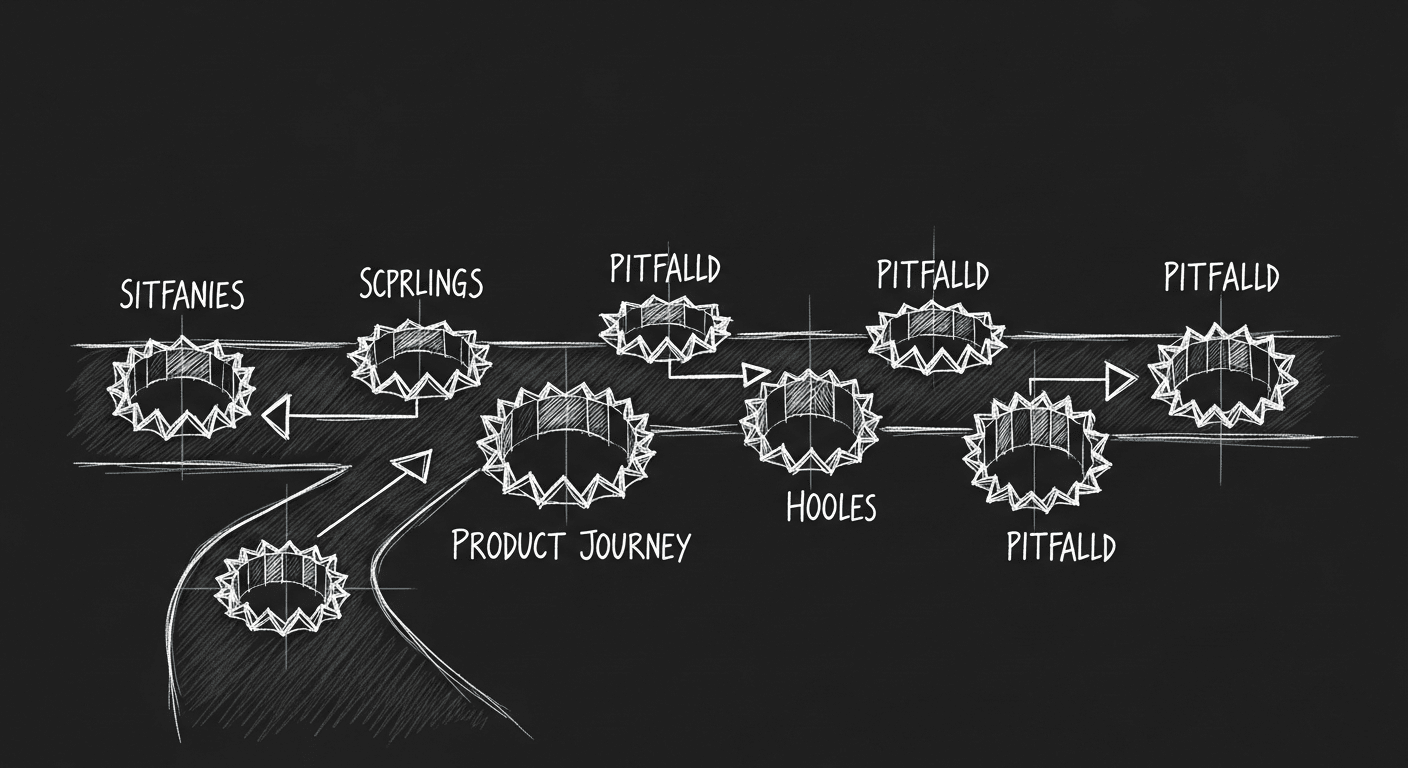
I have watched each of these kill a project
I was in a post-mortem for a clinical documentation AI project that had burned through eight months and a significant budget. The model was good. The training data was solid. The team was sharp. The product had been quietly shelved two weeks earlier after a physician pulled me aside and said, "It just doesn't help me."
No one in that room wanted to say the obvious thing: we had built the wrong product. Not the wrong model. The wrong product. Those are different problems, and we had confused them from the start.
That project wasn't an anomaly. Over the past twelve years, I've been inside enough ML and AI projects, healthcare AI, enterprise ops, consumer products, to see the same failure patterns repeat. GenAI makes most of them worse because the technology is so compelling that it lowers your guard. Here are the six I keep watching teams walk into.
1. Over-Applying GenAI
❌ The mistake: Using a large language model because it's available, not because it's the right tool.
I worked with a team that wanted to classify incoming patient intake forms into one of six categories. They built a prompt, wired up GPT-4, and shipped it. It was slow, expensive, and occasionally wrong in creative ways. A fine-tuned BERT classifier on 500 labeled examples would have hit 97% accuracy in milliseconds for a fraction of the cost.
GenAI is remarkable at open-ended tasks with fuzzy boundaries: summarization, generation, synthesis, Q&A over unstructured content. It's not remarkable at discrete classification, structured data extraction with fixed schemas, or any task where you already have labeled examples and a clear output space.
✅ What to do instead: Before reaching for an LLM, ask: can I solve this with a regex, a classifier, a rule engine, or a SQL query? If yes, do that. GenAI is an amplifier for problems that resist structure, not a replacement for tools that already work.
2. Confusing Product Quality with Model Quality
❌ The mistake: Blaming the model when the real problem is the product.
Back to that clinical documentation project. In the post-mortem, the first instinct was to switch models. "Maybe we need GPT-4o instead of Claude." But the real issue wasn't the output quality. It was that we had designed a workflow that added two extra steps for the physician and interrupted their charting flow at the wrong moment. The model output was fine. The integration was the problem.
I help teams ship AI in production — audits, consulting, custom agents, and eval systems. Start with an AI Audit (from $5k) for an honest read on what to build.
This confusion runs in both directions. Teams also defend bad outputs by saying "the model is doing its best" when the product should be filtering, reformatting, or catching errors before they reach the user. A product that passes raw model output directly to a user has no quality layer. That's not a model problem, it's a design choice.
✅ What to do instead: Instrument your product separately from your model. Track user satisfaction, task completion, and workflow impact independent of model accuracy metrics. When users complain, diagnose before you swap models.
3. Starting with Excessive Complexity
❌ The mistake: Skipping the simple baseline and going straight to the sophisticated architecture.
I've watched teams spend six weeks building multi-agent RAG pipelines with custom vector stores, rerankers, and hybrid search, for a use case where a basic semantic search over 200 documents would have solved 80% of the problem in two days. The pipeline was elegant. It also took three months to stabilize and was still breaking in production when I last checked.
Healthcare AI has a specific version of this: teams that jump to fine-tuning or RLHF before they've established what a good output even looks like. You can't optimize toward a target you haven't defined.
✅ What to do instead: Build the dumbest thing that could possibly work first. Not as a throwaway, as a real baseline you'll compare everything against. If a simple retrieval approach with a prompt template doesn't get you 60% of the way there, that's signal about whether GenAI is the right solution at all.
4. Abandoning Human Evaluation Too Early
❌ The mistake: Replacing human judgment with automated metrics before the metrics are trustworthy.
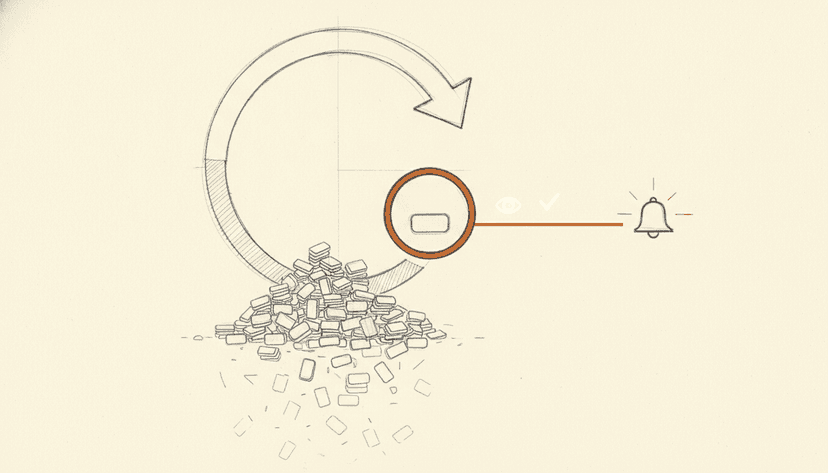
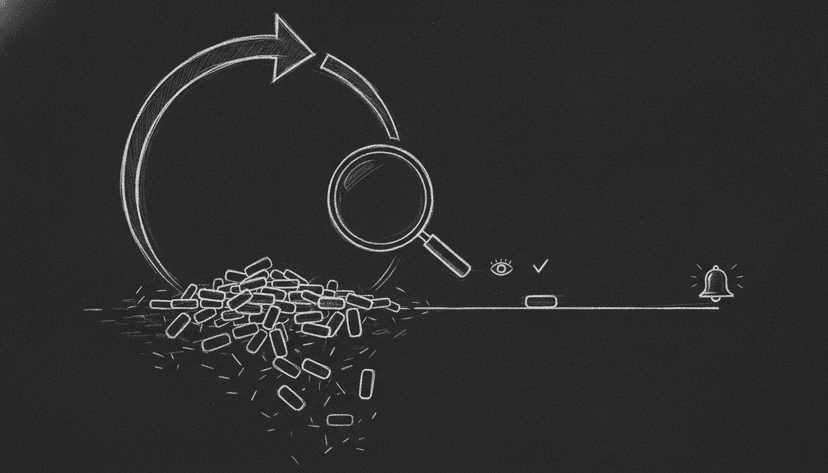
A care management team I worked with built an AI that generated care plan summaries for nurses. Early on, they had a nurse reviewing every output. After two weeks, someone said: "This is taking too long. Let's use ROUGE scores and BERTScore instead." They automated the eval, the nurse moved on, and the team shipped confidently.
Four months later, a nurse flagged that the summaries were systematically downplaying medication adherence issues, the exact thing that mattered most for the patient population they were serving. The automated metrics had been rating those outputs as high quality because the text was fluent and comprehensive. They just had the wrong emphasis.
In healthcare, "wrong emphasis" is not an abstract product quality problem. It's a patient safety issue.
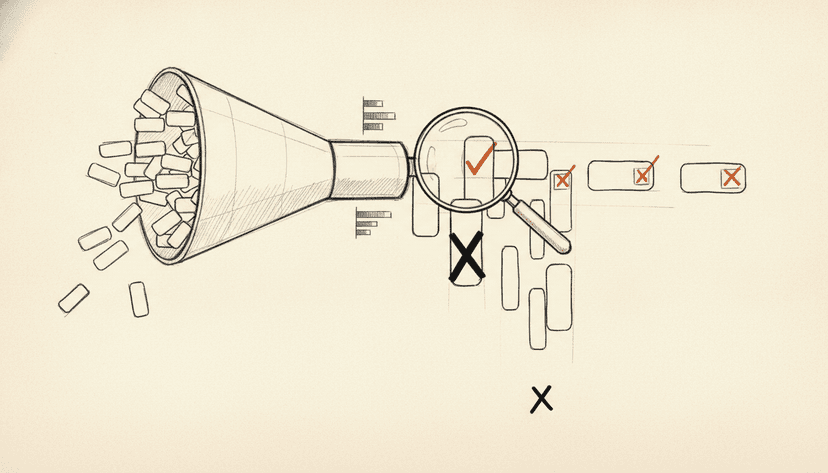
✅ What to do instead: Automated evals are necessary at scale, but they're never a substitute for domain expert review during development. Keep one expert reviewing real outputs throughout. Build your automated evals to match what that expert is actually catching, not what's easy to measure.
5. Ignoring Latency, Cost, and Reliability
❌ The mistake: Treating production infrastructure concerns as someone else's problem until launch.
I've seen two healthcare AI projects hit a wall at the same moment: when the CFO opened the first cloud invoice after launch. One team had designed a prior authorization assistant that made seven LLM calls per request. It worked beautifully in demos. In production, at actual authorization volume, the cost was five times the budget and the P95 latency was eleven seconds, which is an eternity in a workflow where a human is waiting at a computer.
The other failure mode is reliability. LLM APIs go down. Rate limits get hit. When your product is embedded in clinical workflows and the AI is unavailable, what happens? Teams that didn't answer that question before launch found out the hard way.
✅ What to do instead: Define your latency budget, cost ceiling, and reliability requirements before you finalize your architecture. Build caching for repeated queries. Design graceful degradation: what does the product do when the model is unavailable or slow? These aren't afterthoughts. They're load-bearing product decisions.
6. Skipping Problem-Solution Fit Validation
❌ The mistake: Assuming the problem you're solving is the problem users actually have.
This is the most common failure mode and the most fatal. The clinical documentation project I opened with? We had validated that physicians wanted less documentation burden. We had not validated that they wanted us to generate the documentation for them, as opposed to giving them better templates, better voice dictation, or better copy-paste tools. GenAI-generated notes introduced a new cognitive burden: review and correction. Some physicians found it faster to just write the note themselves.
We had assumed the solution fit. We never proved it.
Healthcare has brutal feedback cycles for this mistake because the path from "physician finds this annoying" to "physician stops using it" is very short, and once they've stopped, they don't come back.
✅ What to do instead: Before building, do structured interviews with the people who will actually use the product. Not to validate your idea, but to learn whether the problem you're solving is the one they actually feel. Then prototype the interaction, not the model. Paper prototypes, Wizard of Oz simulations, mock outputs reviewed by real users — all of these will tell you more about fit than another week of fine-tuning.
The Pattern Underneath All Six
Here's what I've noticed: every one of these failures shares a common root. Teams fall in love with the technology before they understand the problem. GenAI makes this especially easy because the demos are genuinely impressive. You show a physician a model that summarizes a patient chart and they light up. You take that excitement into a build cycle and nine months later you have a sophisticated AI that no one uses.
The antidote is discipline about sequence:
Define the problem precisely, not the AI problem, the human problem
Validate that the problem is real and that people will change behavior to solve it
Build the simplest possible solution and measure it against human judgment
Add complexity only where the baseline provably falls short
In healthcare, this discipline isn't optional. The consequences of building the wrong thing, or the right thing wrong, extend beyond wasted engineering cycles. When AI fails in clinical settings, the people absorbing that failure are often the ones least able to push back: overloaded nurses, time-pressured physicians, patients who just needed the right information at the right moment.
That's worth slowing down for.
I've made most of these mistakes myself. The ones I didn't make directly, I watched someone else make from close range. None of them are inevitable. They're all predictable, and predictable failures are preventable ones, if you're willing to be honest about what you're doing before you're deep enough that honesty feels too expensive.