You Are No Longer a Coder: The Shift from Execution to Direction
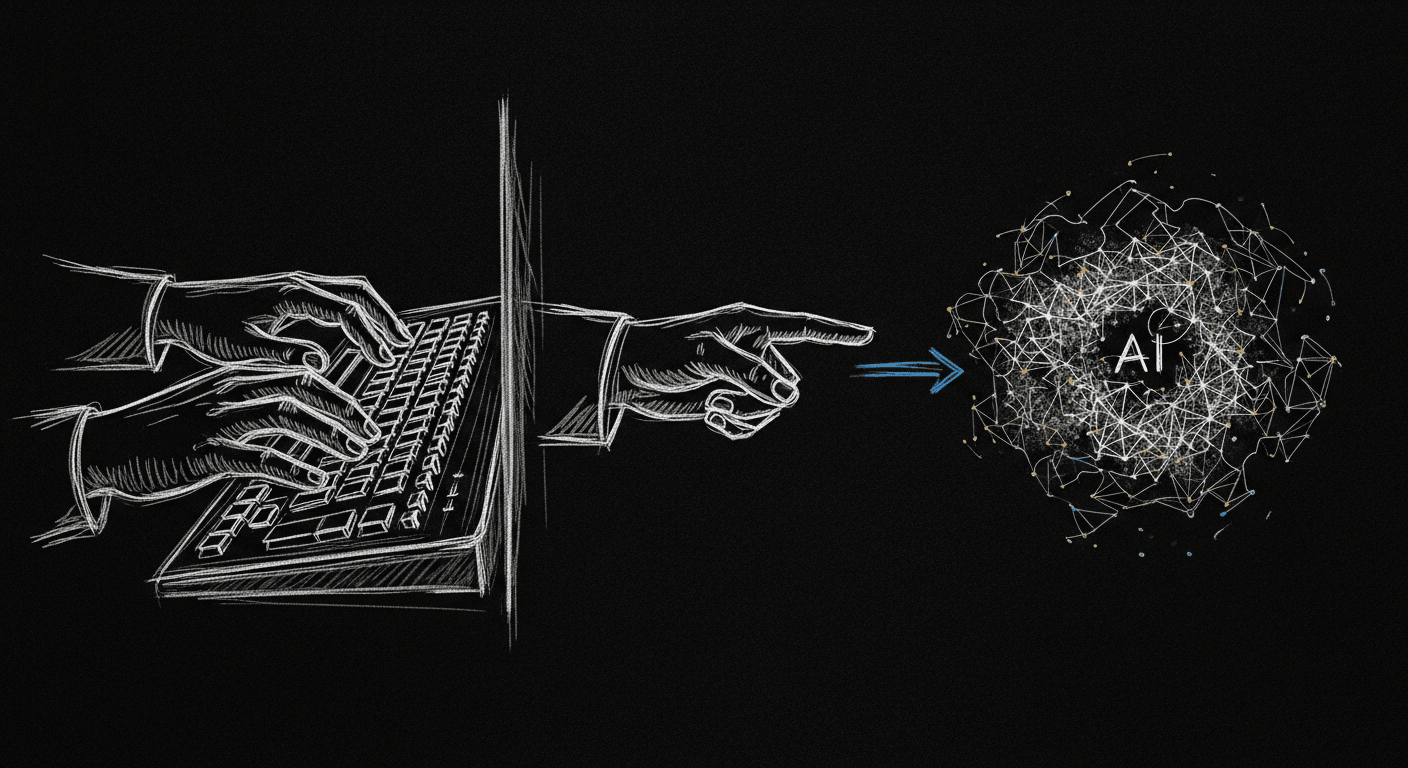
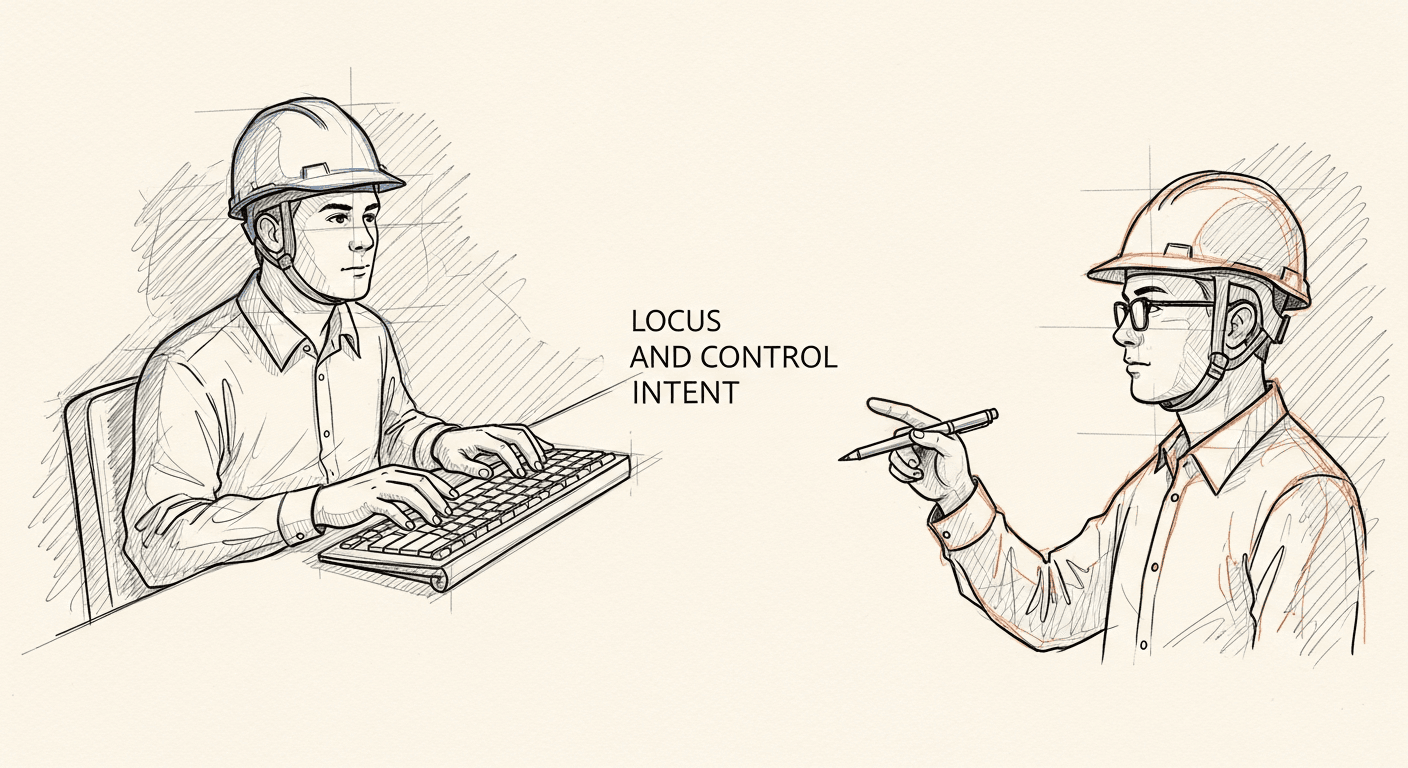
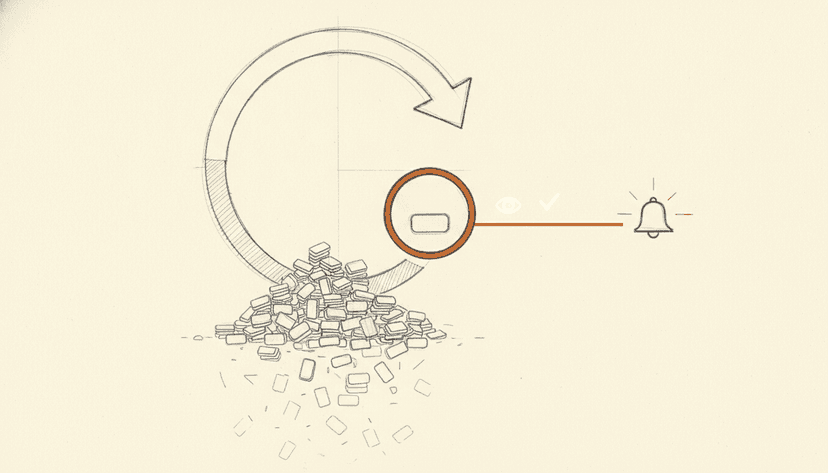
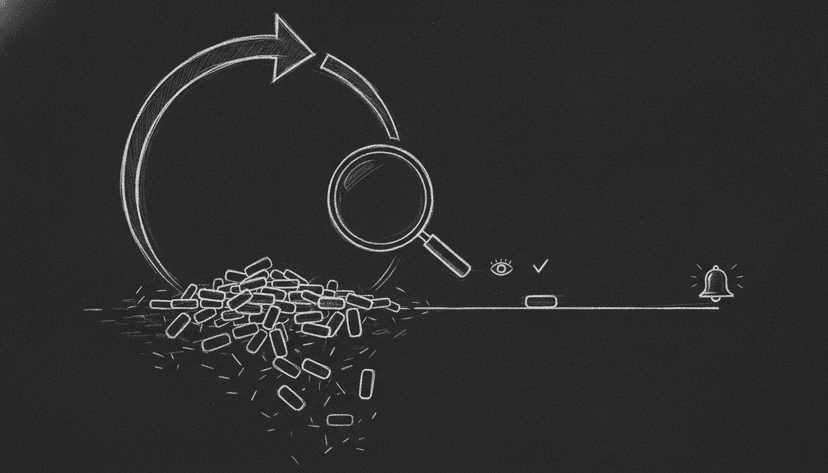
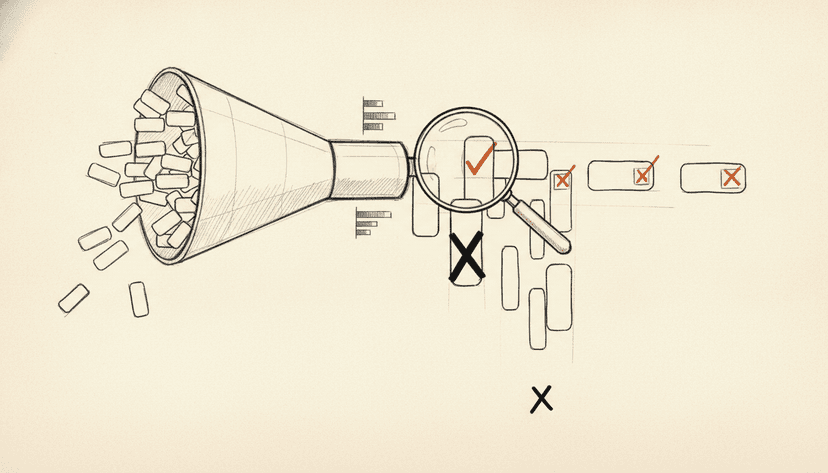
Sketch of engineer shifting from writing code to directing an AI system

What I stopped doing and what I do instead

The best code I shipped last quarter, I did not write. An AI did. I reviewed it, shaped it, redirected it a dozen times, caught three silent errors that would have cost us, and approved the final version. My fingerprints are all over it — just not on the keystrokes.

If you are mid-career, that either sounds liberating or vaguely threatening. A year ago, it would have felt threatening to me too.

The shift that already happened to you

Here's the framing that finally landed for me: the job of a programmer in the LLM era is no longer execution — it is direction-setting, risk management, and human-AI teaming. The loop has changed. You are not the one typing; you are the one deciding what gets typed, reviewing what comes back, and catching what goes wrong.

Most engineers I talk to already know this in practice. They use Copilot or Claude or Cursor every day. But they still think of themselves primarily as coders who use AI tools, rather than engineers who set direction and rely on AI to execute. That framing gap is costing them.

The tools are not a faster keyboard. They are a different job function wearing the same title.

What I actually stopped doing

Twelve years of ML, full-stack, and healthcare systems gave me a lot of muscle memory. Some of that muscle memory I had to deliberately unlearn.

I stopped writing boilerplate. Not just tolerating it being generated — I stopped allocating mental energy to it entirely. CRUD scaffolding, test harnesses, API wrapper code, migration scripts: I describe what I need, the agent produces a draft, I review and correct. The draft is correct about 80 percent of the time. The other 20 percent would have taken me longer to write from scratch than to fix.

I stopped Googling syntax. This sounds small. It is not. The hours I used to spend in documentation tabs, cross-referencing library versions, checking StackOverflow — that time collapsed. I ask the model, I verify once against the actual docs if it matters, and I move on. The cognitive overhead of switching contexts dropped sharply.

I stopped prototyping alone. For years, my default was to spike something in code to test a hypothesis. Now I spike in conversation first. I describe the architecture, the AI pushes back, I find the flaw in my reasoning before I have written a line. The code phase starts much later in the process than it used to, and that has made me faster overall.

What I now spend time on

The time I recovered from execution did not disappear. It relocated.

I spend significantly more time on problem definition than I ever did before. Not requirements documents — real clarity about what we are trying to solve, what done looks like, and where the edges are. Because when you hand a problem to an AI agent, ambiguity gets executed literally. The model will build exactly what you described. If you described the wrong thing, you get a perfect implementation of the wrong thing.

I spend more time on verification than I expected. Not just running tests — reading output, tracing logic, asking the AI to explain what it did and why, and checking whether the explanation matches the code. Agents are confident in their wrong answers. The skill that matters now is knowing when to trust the output and when to dig.

I spend more time thinking about failure modes. Healthcare AI taught me that invisible errors are the ones that hurt you. In an LLM-augmented workflow, a lot of errors are invisible — technically correct code that handles the happy path and silently fails at the edge. I review for edge cases more deliberately than I did when I wrote every line myself, precisely because I know I did not write every line.

What AI cannot do

It cannot hold intent across a long project. Context windows are improving, but the model does not carry the accumulated judgment of weeks of decisions the way a human does. I have to externalize that — in CLAUDE.md files, in architecture notes, in explicit decision logs — because if I do not, the agent will drift toward plausible-looking defaults that conflict with choices we made three weeks ago.

It cannot catch its own blind spots. When I build something, I know which parts I am uncertain about and I worry at them. The model produces everything with equal confidence. A subtly wrong database schema looks exactly like a correct one in the output. You need human skepticism applied deliberately, not just a quick scan.

It cannot make judgment calls about people or risk. Whether to build this feature now or wait. Whether this technical debt is worth carrying. Whether the team can absorb another architectural change right now. Those calls require context the model does not have and cannot approximate.

In healthcare AI specifically — where I spend most of my time — the judgment about when an AI output should be trusted, flagged, or overridden by a clinician is not something you can delegate. The domain expertise that tells you a model's confidence is not calibrated for this edge case, or that this use case has regulatory weight the training data never saw: that is irreplaceable human work.

The hardest part of the transition

Not the tools. The identity.

I built my professional reputation, in part, on being someone who could write difficult systems. Complex ML pipelines. Interoperability engines for healthcare data. Full-stack products under tight deadlines. The craft of that mattered to me. And there is a version of me that reads "you no longer need to write code" as a demotion.

That version of me is wrong, but the feeling is real and worth naming.

What I found on the other side of that resistance: the problems I am working on now are harder than the ones I was working on before. Not harder to implement — harder to think through. The implementation is fast. The thinking — the what and why and whether and when — that is where the difficulty lives, and it turns out that is where I do my best work anyway.

The engineers I see struggling with this transition are the ones trying to preserve the execution-heavy workflow by just using AI as autocomplete. They get a productivity bump, but they miss the structural shift. The engineers who are thriving are the ones who let go of the execution identity and invest in direction-setting as the core skill.

How to adapt

Get explicit about the skills that actually matter now. Prompt iteration is real coding. You are specifying behavior, managing edge cases, and debugging logic — you are just doing it in a different language. Treat it with the same rigor.

Build verification habits. Do not skim AI output — review it. Build the mental habit of asking: what would have to be wrong for this to fail? Where did the model not have enough information to get this right? What assumptions did it make that I did not authorize?

Externalize your context aggressively. The model does not remember. Your project files, your architecture docs, your decision logs — these are the memory layer. The better that layer is, the better the agent performs. Treating context engineering as overhead is the fastest way to end up with AI that drifts.

Accept that you are managing uncertainty now, not just complexity. Writing code was uncertain in a bounded way — I knew what I did not know. LLM-augmented development is uncertain in a more open-ended way. The output looks complete. Your job is to maintain the skepticism to check whether it actually is.


Twelve years in, I am a better engineer than I was three years ago. Not because I write more code — I write less. Because the shift forced me to get precise about what I actually know, what good actually looks like, and what decisions only a human can make.

That is the job now. The sooner you stop thinking of it as a side effect of better tooling and start treating it as the core skill, the more useful you become.