Every few months someone posts a thread declaring RAG dead. Long context windows killed it. Agents killed it. Fine-tuning killed it. The post gets a lot of engagement because developers who've been burned by bad RAG want someone to validate their frustration.
I get it. I've been there. But the hot take is wrong, and I want to be precise about why, because the wrong diagnosis leads to the wrong fix.
RAG is not dead. Most RAG implementations are just garbage.
The Narrative and Why It Spreads
Here's the origin story. A team decides to build a RAG pipeline. They split documents into fixed-size chunks, embed them, dump them in a vector database, and call it done. At demo time it looks fine. In production it immediately starts hallucinating, missing relevant content, and confidently confabulating answers from irrelevant context that happened to score well on cosine similarity.
The team concludes: retrieval is the problem. Maybe they even read the right benchmarks and conclude that long context models do better. So they try stuffing the entire knowledge base into the context window. Now the model runs slowly, costs more, and still produces bad answers, just with more confident-sounding citations.
At this point, the "RAG is dead" post writes itself.
But here's what actually happened: the team never had a retrieval problem. They had a context quality problem. Those are not the same thing.
What Actually Kills LLM Performance
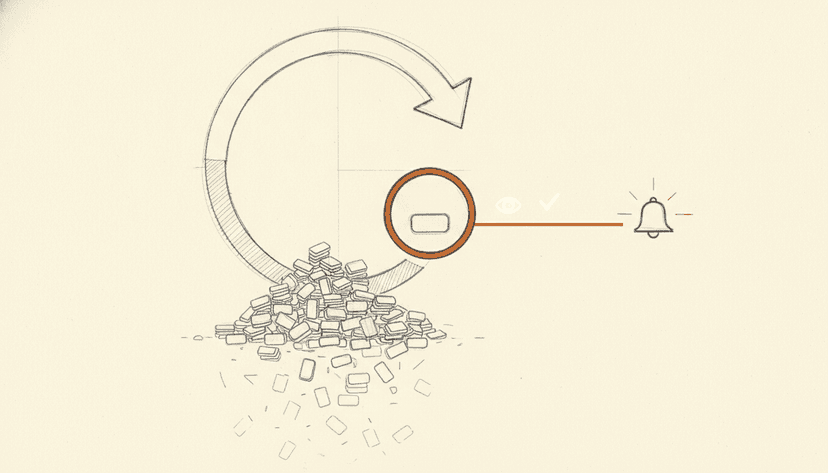
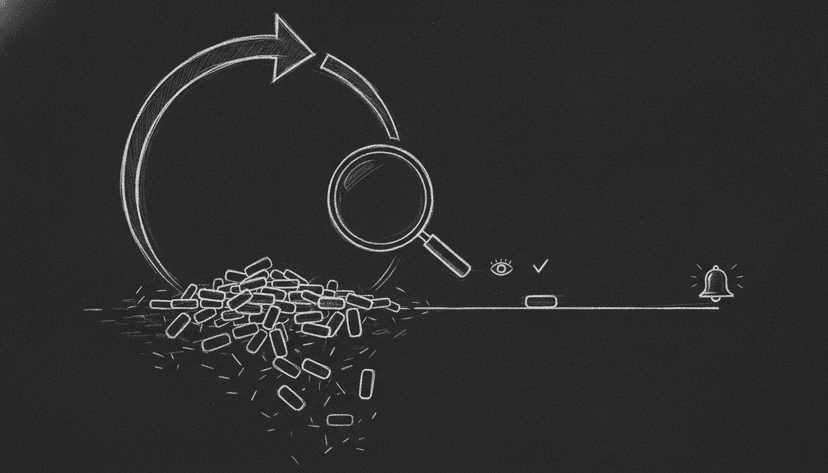
The failure mode has a name: context rot.
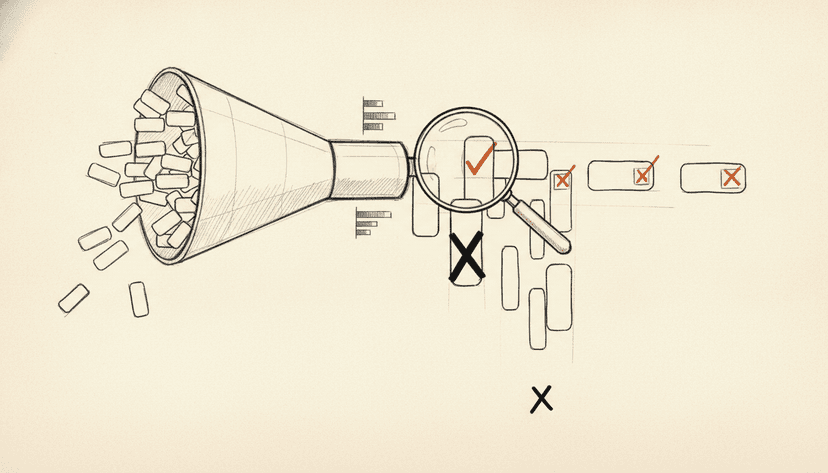
Context rot is when you fill the model's context window with information that's technically related to the query but not useful for answering it. Irrelevant chunks. Outdated records. Contradictory snippets that don't agree with each other. Documents without enough metadata to establish what they are, when they were created, or whether they should be trusted.
Models don't fail because they can't reason. They fail because they're reasoning over bad inputs. Garbage in, garbage out: this was true in 2015 with gradient boosting and it's still true in 2026 with frontier LLMs.
The reason this problem is invisible in standard benchmarks is that benchmarks feed the model clean, curated, task-relevant context. Production systems feed models a noisy, heterogeneous mess of documents that were never designed to be retrieved together. The benchmark scores don't tell you what happens when retrieval surfaces a partially relevant document from three years ago alongside a current one that contradicts it.
I help teams ship AI in production — audits, consulting, custom agents, and eval systems. Start with an AI Audit (from $5k) for an honest read on what to build.
I've built RAG systems for healthcare. The stakes are higher than most domains. When context quality breaks, it doesn't just produce a wrong answer. It produces a wrong answer in a context where someone might act on it. A clinical decision support tool that pulls in an outdated treatment guideline isn't slightly annoying. It's dangerous.
A few things I learned the hard way:
No metadata, no retrieval. Chunks without source metadata — document type, effective date, facility scope, author role — are retrieval liabilities. The vector distance tells you semantic similarity. It tells you nothing about whether the document is current, applicable to this patient population, or superseded by a newer version. Without metadata filtering upstream of retrieval, you're asking the embedding model to make decisions it was never trained to make.
Chunk boundaries matter enormously. Splitting on token count is fast and produces bad results. A clinical note, a lab result interpretation, a formulary entry, and a billing code summary are not interchangeable chunk types. When you split them the same way and mix them in the same retrieval pool, you lose the structure that makes them meaningful. I've seen systems where the most semantically similar chunk to a question about medication dosing was a scheduling note that happened to mention the same drug name.
Irrelevant context is worse than no context. Given the choice between an LLM with no retrieval and an LLM with retrieval that surfaces marginally relevant documents, the no-retrieval version often performs better. The model's priors are more reliable than poisoned context. When you give a model ten chunks and three of them are genuinely useful and seven are noise, the noise actively degrades the signal. The model can't reliably identify and ignore the bad ones.
Long Context Doesn't Solve This
The long context counterargument goes like this: if you just make the context window big enough, you can put everything in and the model will figure it out.
This is wrong in both directions.
First, "just put everything in" is only viable for small, well-bounded knowledge bases. Healthcare systems have millions of documents. Genomics databases have billions of records. You're not fitting that in a context window. Retrieval remains necessary for any domain with serious data volume.
Second, the larger your context window, the more important context quality becomes, not less. A 200k token context with 180k tokens of irrelevant material doesn't give the model more signal. It drowns the signal in noise. The model's attention mechanisms are not magic. "Lost in the middle" is a documented, reproducible failure mode where relevant information positioned in the middle of very long contexts gets systematically underweighted.
Long context windows are a tool. They don't eliminate the need to think carefully about what you put in them.
Rethink It as Context Engineering
Here's the reframe that actually helps: stop thinking about RAG as a retrieval problem and start thinking about it as a context engineering problem.
The goal is not to retrieve relevant documents. The goal is to construct a context window that gives the model exactly what it needs to reason well: no more, no less, in the right order, with the right metadata.
That reframe changes what you optimize for. Instead of chasing better embedding models or higher top-k recall, you start asking:
What's the minimum sufficient context for this query type?
How do I filter for recency, scope, and authority before anything hits the context window?
What metadata does the model need alongside each chunk to reason about its reliability?
Am I giving the model contradictory information and expecting it to resolve conflicts I haven't acknowledged?
What does failure look like, and am I actually measuring it?
That last question is where most teams fall down. They tune retrieval on semantic similarity scores and call it done. Semantic similarity is a proxy for relevance, and it's a weak one. The real test is whether the model produces better outputs with retrieval than without, measured on your actual task, with your actual documents, against ground truth you've verified yourself.
What Good RAG Actually Looks Like
Good RAG is boring to describe and hard to build. It involves:
Pre-retrieval filtering by document metadata before a single embedding gets compared. Recency filters. Scope filters. Source authority filters. The embedding index is for semantic similarity; everything else should be handled by structured filters that run first.
Chunk design that respects document structure. Clinical notes are not the same as policy documents. Lab results are not the same as literature citations. Each document type deserves a chunking strategy that preserves its meaningful units.
Context assembly that's deliberate. Not "take top-10 chunks by similarity." Which chunk types are relevant to this query type? What order should they appear in? Does the model need to know the provenance of each chunk? Is there conflicting information that needs to be flagged explicitly rather than silently included?
Evaluation that measures what matters. Not retrieval recall in isolation, but end-to-end output quality on representative queries, measured by someone with domain expertise who knows what a good answer looks like.
In healthcare, this means building evals around clinical scenarios where we know the right answer and testing whether our pipeline gets there reliably. Binary pass/fail, not fuzzy scores. And reviewing the failures manually, every time, until we understand the failure mode. Not just counting them.
The Real Problem
The "RAG is dead" narrative persists because it's easier to blame the paradigm than to do the hard work of building retrieval right.
Retrieval is more important than it's ever been. Every domain that matters, healthcare, law, finance, engineering, has a knowledge base that's too large, too dynamic, and too heterogeneous to live in a fine-tuned model or a fixed context window. Retrieval is how you bridge structured knowledge to language models at scale.
The problem is that most teams treat retrieval as a solved problem you can configure in an afternoon. It's not. It's one of the hardest parts of building AI systems that work in production, and it compounds every other quality problem you have.
Stop debugging your embedding model. Start thinking harder about what you're putting in the context window, and why.