Mostly about building products, healthcare tech, and lessons learned along the way.
Loading articles
The Three Things Exceptional Engineering Leaders Do (And the One They Stop Doing) | Clint Johnson
The Three Things Exceptional Engineering Leaders Do (And the One They Stop Doing)
The three things. Most people only do one.
The first time I managed a team through a rough quarter, I made every mistake in the vision-casting playbook. I ran weekly all-hands. I brought in guest speakers. I wrote a document called "Our North Star" that I genuinely believed in. The team heard all of it. They nodded in the right places.
And then they couldn't ship anything, because the approval process to get staging access required three different VP signatures and nobody had fixed that in two years.
I had given them a compelling destination but left them stuck in traffic. That was my introduction to what I now think of as the three pillars of engineering leadership — and specifically, to my own blind spot in the middle one.
The Framework That Actually Maps to Reality
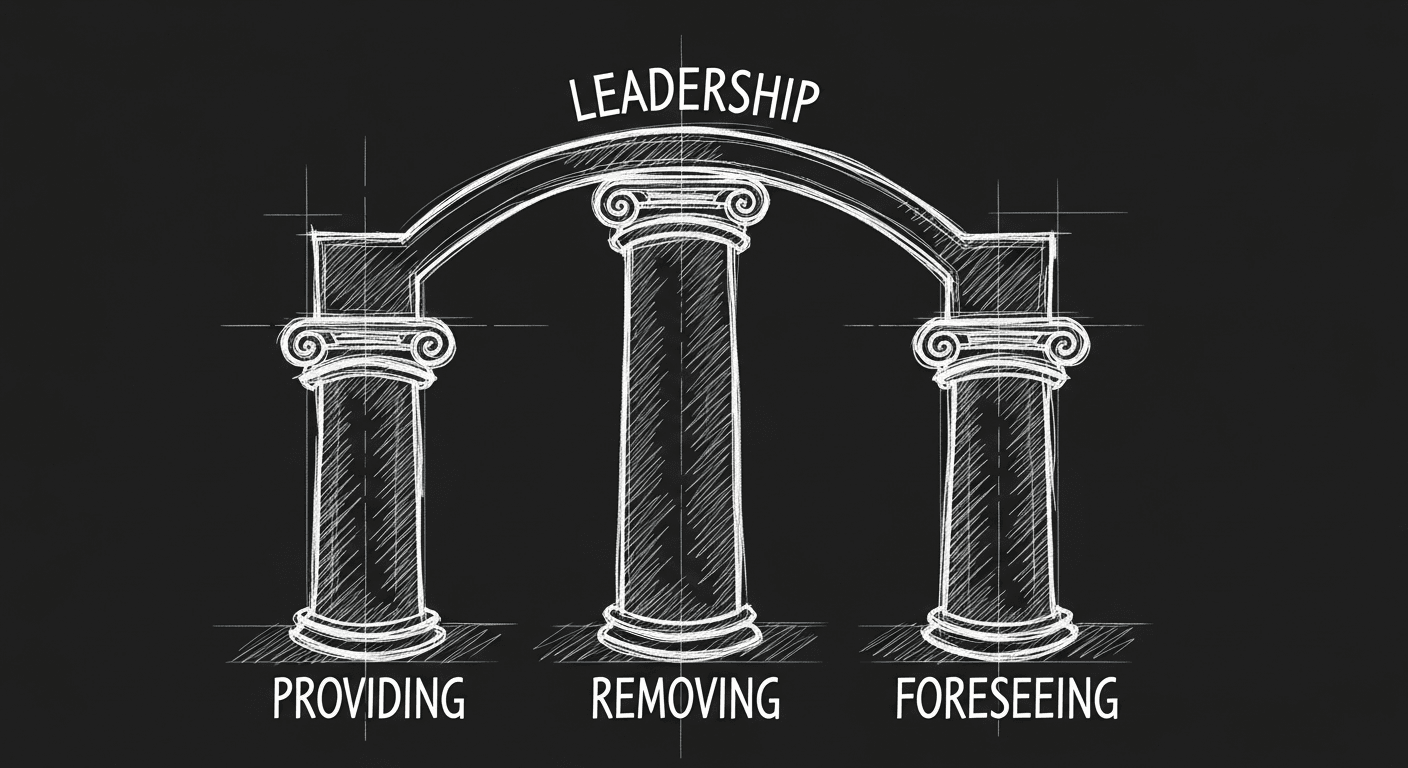
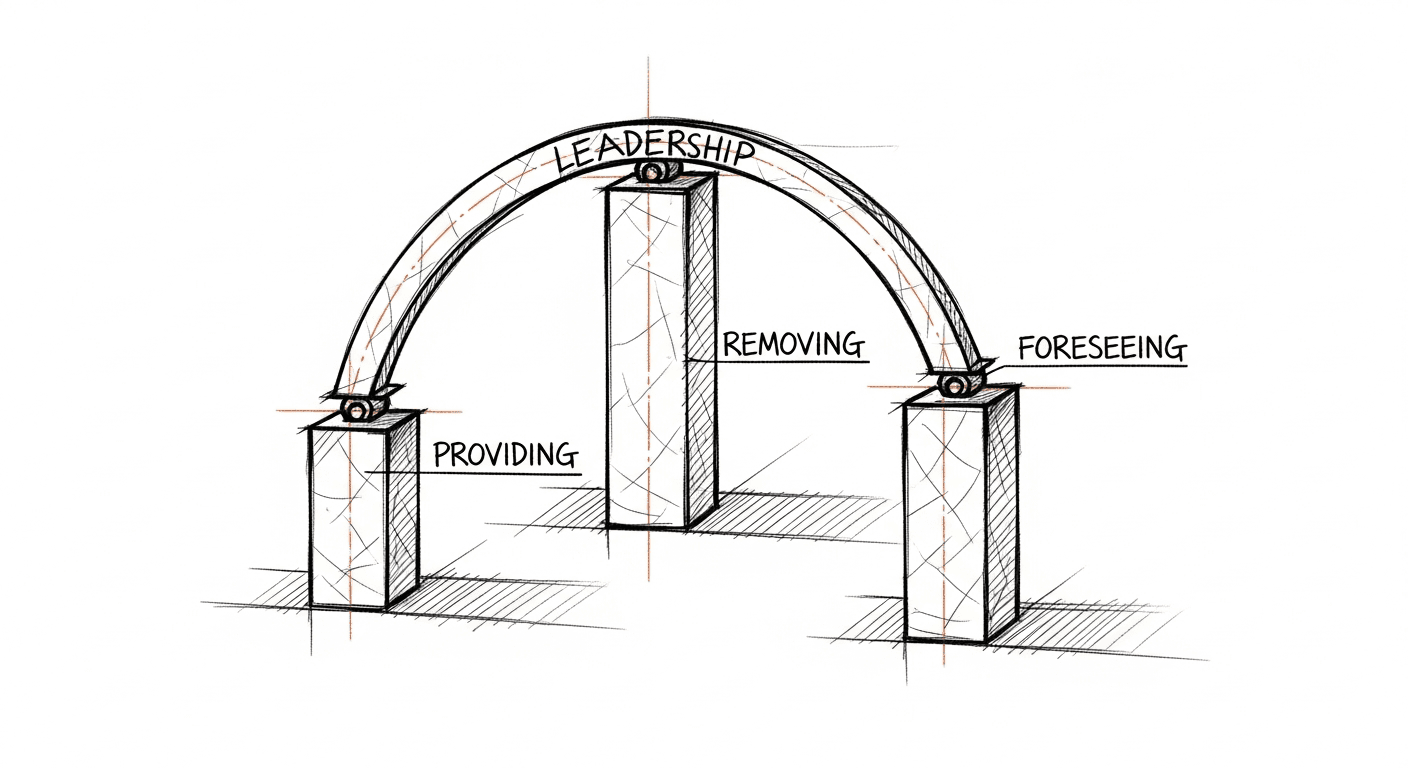
Here's the framing I keep coming back to: exceptional leaders operate across three distinct pillars. Providing — vision, resources, coaching, the things that move people forward. Removing — obstacles, politics, confusion, the things that hold people back. Foreseeing — anticipating change before it arrives and positioning the team for it.
Most leaders I've worked with, and most leaders I've been, are strong in one of these. Some are good at two. Almost nobody walks in the door strong at all three, and that imbalance causes a specific, predictable kind of organizational damage.
This framing stuck with me because I've watched each type of failure up close. Not in the abstract. In real teams, with real engineers who deserved better.
The Leader Who Can Provide But Can't Remove
He was one of the most inspiring people I've ever worked for. Genuinely. He could walk into a room of burned-out engineers and, forty-five minutes later, have everyone re-energized about the mission. He wrote strategy documents that were worth reading. He cared about career development in a way most leaders only perform caring.
But if you needed something unblocked — a vendor contract stuck in legal, a cross-team dependency that wasn't moving, a process that made no sense — he was useless. Not because he didn't care. Because he genuinely didn't enjoy that kind of work, and over time, he'd built a reputation as someone who would listen but not act.
The engineers on his team were motivated and directionless at the same time. They knew where they were going. They just couldn't get there. After a while, the best ones left for teams where they could ship.
I help teams ship AI in production — audits, consulting, custom agents, and eval systems. Start with an AI Audit (from $5k) for an honest read on what to build.
She was the opposite problem, and in some ways harder to recognize because her teams always looked productive in the short term. She cleared blockers faster than anyone. If you were stuck, she was on the phone within the hour. She knew the org chart well enough to route around almost any obstacle.
But when I asked engineers on her team where they were headed in two years — not their careers, just their team's technical direction — I got mostly shrugs. "Wherever she points us." There was no ownership of the mission because there was no mission to own. The team executed cleanly and drifted strategically.
When she left, the team had no center of gravity. Six months later, half of them had transferred out.
The Leader Who Can Foresee But Can't Execute Today
This one is the most flattering failure mode, which makes it the most dangerous. The engineer who became a leader because they were always right about technology trends, and who continued to be right about technology trends, but never quite connected their foresight to the current sprint.
I've been this person. It's seductive. You can see around corners, you're good at explaining what's coming, and your predictions validate themselves over time. But the team still needs to ship what's in front of them today. The gap between "we should be building toward X" and "here's how what we're doing right now connects to X" is where a lot of engineering leaders lose their teams.
The engineers hear visionary thinking and experience it as noise, because they're trying to figure out how to merge a PR and handle an oncall rotation and get performance reviews done.
Where My Growth Has Actually Come From
I'm better at providing than the other two. Probably always will be. The "removing" pillar is where I've done the hardest personal work.
What shifted for me was realizing that removing obstacles is not a soft skill or a secondary function. It is often the highest-leverage thing a leader can do. When your team is stuck on something they can't resolve themselves — a dependency, an organizational friction, a process that hasn't been revisited since the company was one-third its current size — every day that passes is a real cost. Your engineers are smart enough to see the blocker. They're frustrated that nobody is fixing it. And if you're off writing the next vision document while they're waiting for a budget approval that's been in limbo for six weeks, they're going to stop trusting the vision.
The most valuable things I've done for some teams were not strategy sessions or coaching conversations. Sitting on the phone with a procurement contact for two hours until we got a vendor onboarded. Walking into a meeting between two teams who hadn't been talking and refusing to leave until we had an agreement. Canceling a process that had outlived its usefulness even though someone senior was attached to it.
None of that feels like leadership in the way leadership gets talked about. But it is.
On Contextual Style and Cross-Org Influence
The right balance across these three pillars shifts depending on what a team actually needs at a given moment.
A team in crisis needs obstacle removal, not more vision. A team that's technically excellent but rudderless needs direction more than it needs another blocker cleared. A team that's executing well in the present but hasn't thought about what their stack looks like in 18 months needs foresight introduced carefully, without disrupting what's working.
The failure mode is applying your default pillar regardless of context. The leader who's strong at providing direction and just keeps providing direction even when the team's real problem is organizational friction. Or the one who's good at foreseeing change and uses every 1:1 as an opportunity to talk about the future when their engineers are drowning in the present.
Cross-org influence is also deeply connected to all three pillars in ways that aren't obvious until you need it. Providing is easy to do within your team. Removing obstacles almost always requires relationships and credibility outside your team. Foreseeing change is useless if you can't translate it across organizational boundaries in ways that other leaders and stakeholders can act on. The leaders who compound their impact over time are almost always the ones who've invested seriously in working across org lines, not just within them.
What To Actually Do With This
If you're honest with yourself, you probably already know which pillar is weakest. The clues are in your team's frustrations. Engineers will tell you indirectly: they talk about being blocked more than about being directionless, or vice versa.
A few things that have helped me:
Audit your calendar against the three pillars. Where are you spending time? If 80% is in strategy and vision conversations, you're probably under-investing in removal. If you're all execution all the time, your team may be drifting.
Ask your engineers what's slowing them down, not what they're working on. The second question gets you status. The first one gets you signal about where you're failing as a leader.
Get comfortable with the unglamorous work. Clearing a blocker is not intellectually stimulating in the way strategy is. It's often tedious, political, and slow. Do it anyway. Your team notices.
On foresight: name it, then connect it. If you're seeing something coming — a technology shift, an organizational change, a market pressure — say it explicitly and then work backward to what it means for what the team is doing right now. Forward-looking statements that don't connect to today are just noise.
The leader I want to be — the one I'm still working toward — is not the one who's spectacular at one of these pillars. It's the one who's reliably competent across all three, and who reads the room well enough to know which one the team needs most at any given moment.
My "North Star" document from that first rough quarter was fine. The vision was actually pretty good. But the team needed someone to clear the three VP approval process first. I had the order wrong.