Mostly about building products, healthcare tech, and lessons learned along the way.
Loading articles
The Two Rhythms of B2B Tech: What Palantir Gets Right That Most Companies Get Wrong | Clint Johnson
The Two Rhythms of B2B Tech: What Palantir Gets Right That Most Companies Get Wrong
The ontology layer: a semantic graph that makes enterprise AI grounded, not hallucinated
Palantir is a genuinely hard company to explain at a dinner table. The financials look strange. The margins are thin for software. The headcount is heavy. Government contracts make up a weird percentage of revenue for a company that pitches itself as a commercial platform. The stock has been called everything from a cult to a scam to the next Oracle.
When you dig into how it works, the architecture, the deployment model, the reason customers pay what they pay, a clear logic emerges. That logic has implications well beyond Palantir itself.
The insight is this: Palantir figured out that the bottleneck in enterprise software is not the software. It is the last mile between the platform and the operational decision. Everything they've built, Foundry, the FDE model, AIP, is an attempt to close that gap faster than any competitor can.
What Foundry Actually Is
Most enterprise software categories have a clear elevator pitch. CRM tracks customers. ERP manages operations. BI tools visualize data. Foundry doesn't fit cleanly into any of those buckets, which is partly why it's so often mischaracterized.
Foundry is an ontology layer. Not a database. Not a BI tool. Not a data warehouse. An ontology is a structured, typed model of the real world: a semantic graph where objects (assets, employees, suppliers, shipments, patients, facilities) exist as typed nodes with properties and relationships between them.
When a pharmaceutical company onboards Foundry, they're not migrating their databases into it. Foundry connects to whatever exists, Snowflake, SAP, Oracle, a dozen internal APIs, maybe a legacy COBOL system from 1987, and maps all of it into a unified object model. The Drug object links to the ClinicalTrial object, which links to the Site object, which links to the Regulatory Submission object. Every edge is typed. Every node has a provenance chain.
The value is semantic coherence across disparate data sources. Instead of fifteen teams running fifteen SQL queries against fifteen different schemas and getting fifteen different answers to the same question, there is one object graph that everyone queries. The graph becomes the source of truth not because data was migrated into it, but because it's the authoritative lens through which all the underlying data is interpreted.
I help teams ship AI in production — audits, consulting, custom agents, and eval systems. Start with an AI Audit (from $5k) for an honest read on what to build.
This is the graph database component: Foundry's object model behaves as a typed property graph. Queries traverse edges. You can ask "show me all suppliers where Tier 1 vendor concentration exceeds 40% of a critical part family" and Foundry can answer it because those relationships are modeled as first-class graph edges, not buried in flat tables waiting for a skilled analyst to reconstruct the join logic.
Forward Deployed Engineers: The Model
The real secret weapon is the Forward Deployed Engineer, or FDE. It's a very specific thing: not a consultant, not a solutions engineer, not a customer success manager. An FDE is a software engineer who goes and lives at the customer site and writes production code. In the customer's environment. On the customer's operational problems. Measured in days, not sprint cycles.
Palantir's standard deployment pattern for a large enterprise contract involves 3–8 FDEs embedded for anywhere from 6 to 18 months. They build real applications: operational dashboards, workflow tools, AI-assisted decision surfaces, directly in Foundry, using the customer's data, solving the customer's actual problems. A government logistics agency gets a working supply chain visibility app in two weeks. A hospital system gets a patient throughput optimizer before the next quarterly review.
This is why Palantir's sales motion looks nothing like Salesforce's. Salesforce sells you a license and hopes you adopt it. Palantir sells you a contract that includes the engineers to make it work. The FDE team isn't overhead. It's the delivery mechanism. The software is the platform; the FDEs are the product.
The speed is the value proposition. Enterprise procurement is legendarily slow. A typical government software contract runs 18–36 months from RFP to deployment. Palantir's pitch: we can show you a working system in 6 weeks. Not a demo. A running application on your data. That pitch is credible because the FDE team makes it credible.
The AI Layer and Why the Graph Matters
AIP, Palantir's AI Platform, sits on top of Foundry's ontology. The sequence matters enormously.
Most enterprises that try to bolt AI onto their operations run into the same problem: the AI has no grounding. A large language model answering questions about your supply chain is doing pattern matching against tokens. It doesn't know that VND-4421 is a Tier 1 titanium supplier, that your contract with them expires in 90 days, or that there's a port delay in Rotterdam affecting their primary shipping lane. It will hallucinate confidently rather than admit it doesn't have that context.
Foundry's ontology solves this grounding problem at the architecture level. Because every real-world object is a typed node in the graph, an AI agent has something to reason against. When AIP connects an LLM to a Foundry ontology, the model can answer "what is the on-hand inventory position for our top 10 critical components across our three main distribution centers" because those objects, InventoryItem, DistributionCenter, Component, exist in the graph with real, live data attached. The model isn't guessing. It's querying.
This is what separates enterprise AI that works from enterprise AI that stays a pilot forever. The graph is the grounding layer. Without it, you're doing prompt engineering on unstructured blobs and hoping the model is directionally right. With it, you have a semantic substrate that agents can actually navigate.
The progression Palantir is betting on: as AIP matures, customers need fewer FDE hours per unit of operational value. The AI layer handles more of the last-mile integration that FDEs currently do manually. Margins improve. The model scales. Whether that bet pays off is the actual debate worth having about the stock.
What Customers Actually Pay For
A large enterprise Palantir contract runs in the range of $5–15 million per year, sometimes significantly more for defense. That price point buys several things simultaneously.
The software license itself: access to Foundry, the Pipeline Builder, Workshop for operational apps, AIP. That part competes with Databricks, Snowflake, and Microsoft Fabric on technical merit. It's genuinely good, but not magically better than the competition in every dimension.
The FDE team: a squad of strong engineers whose entire job is making your use case work. This is the part competitors cannot easily replicate. You cannot commoditize embedded human expertise at the speed Palantir deploys it.
The institutional knowledge transfer: over 18 months, the FDE team trains internal teams, documents the ontology design decisions, and builds the muscle memory inside the customer organization. That knowledge transfer converts a project into a platform.
The sticky part: the FDE team is part of the product. When an FDE engagement ends, some customers find their internal team can maintain and extend what was built. Others find the system slowly calcifies without the embedded expertise. This is Palantir's stickiness and its most valid criticism simultaneously. If the knowledge transfer works, you have a durable capability. If it doesn't, you have expensive technical debt with limited internal ownership.
Two Rhythms, One Company
Here is the broader insight that Palantir illustrates, and why it matters for any B2B company with an implementation team.
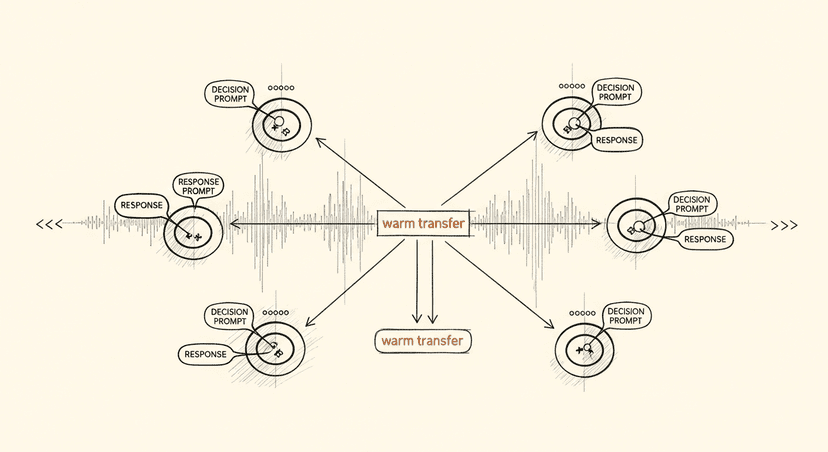
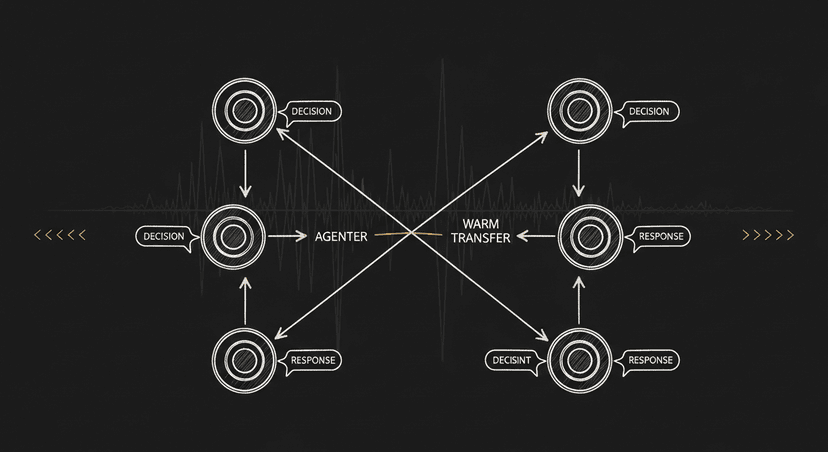
There are two fundamentally different operating rhythms inside most technology companies, and they aren't naturally compatible.
Tech-enabled services operate in days and weeks. The FDE team, the SWAT deployment squad, the enterprise implementation org: these teams are close to the customer, high-context, moving fast on bespoke problems. Their output isn't a feature; it's a result. The unit of value is an operational capability that works in this customer's environment. By definition, it's not immediately repeatable. The team's tacit knowledge is the product.
Product teams operate in quarters. They build for a category, not a customer. The point of the product team is repeatability: write it once, sell it to a hundred customers. They burn capital now and harvest it later at scale. The code is the product.
Most B2B companies run both rhythms. The enterprise software company with a professional services arm. The SaaS company with a customer success engineering team that does "light customization." The healthcare platform that has a clinical implementation team deploying the product at each new health system.
The problem is that most companies don't manage the tension between these two rhythms explicitly. When you don't manage it explicitly, you get a specific and predictable failure mode.
The services team is discovering what customers actually need: at the sharp edge, in production, under real operational pressure. But there's no clean channel for that discovery to inform the product roadmap. The product team is building features based on the loudest enterprise customer voices and their own judgment about what will generalize. The services team can't adopt those features because they were designed for a hypothetical customer, not the heterogeneous real-world environments they're actually working in. Technical debt accumulates in both directions: custom solutions that should have been abstracted into the platform, and platform features that can't be adopted without custom integration work.
This is the entropy that quietly builds until an acquisition or a reorganization forces it into the light.
Why This Becomes an Existential Risk
The rhythm mismatch becomes most dangerous in two scenarios.
Acquisitions. When you acquire a company that delivers product value through a heavy services layer, you inherit the technical debt and lose the tacit knowledge simultaneously. The FDE team or the implementation squad walks, they have options and an integration period is unsettling, and suddenly the acquirer is holding a complex ontology model or custom integration stack with no one who understands why it was built the way it was. The intellectual capital was in the people, not the code. Due diligence rarely prices this correctly.
Roadmap capture. Product roadmaps that are secretly hostage to three large enterprise customers' custom implementations are common and genuinely difficult to escape. The implementation team built something bespoke for Customer A three years ago. Customer A now has renewal leverage, and the bespoke implementation is load-bearing. The product team can't deprecate it without breaking a $10M contract. The abstracted version that would serve the whole market never gets built because the team is maintaining the one-off.
The mitigation, the thing Palantir does that most companies skip, is a productization ritual. A scheduled cadence, with actual ownership, where the services team's custom work gets reviewed for abstraction potential and the viable pieces get rebuilt as reusable platform components. Foundry's Pipeline Builder, Workshop application framework, and many of its AI workflow components began as one-off customer implementations that an FDE team built, recognized as generalizable, and handed back to the product org to productize.
Most B2B companies doing SWAT-team delivery have no productization ritual. They have quarterly business reviews where the services team updates the product team on what customers are asking for. That's not the same thing. Productization is an engineering investment, not a feedback loop.
The Bet Underneath It All
Palantir is fundamentally a bet that the ontology architecture, the semantic graph and typed object model, is defensible enough to eventually make the services layer thinner. If the graph is the right abstraction for enterprise AI grounding, and if AIP continues to mature, then the long-term trajectory is a world where customers need fewer FDE hours per dollar of operational value. The platform gets better at the last-mile work that engineers currently do by hand.
That's a coherent long-term thesis. It's also a thesis that requires getting the productization feedback loop right for the next 5–10 years while margins are still under pressure from the services headcount. If the FDE team keeps building one-offs that never get abstracted, the platform never thickens. If the ontology model doesn't generalize cleanly across industries, the abstraction doesn't hold.
The takeaway for anyone running a B2B technology org is not "do what Palantir does." Most companies can't afford to embed engineers at every customer account. The takeaway is: name your two rhythms explicitly, design a channel between them, and run a productization cadence.
Name which work is services-rhythm and which is product-rhythm. Be honest about which one your team is actually doing, because the two rhythms have different incentive structures, different success metrics, and different technical debt profiles. Design a real channel, not a backlog tag, not a quarterly review, where services-rhythm learning gets evaluated for productization. Run that channel on a fixed cadence with engineering resources attached.
If you don't do this deliberately, you'll do it accidentally and reactively when the debt surfaces. Usually during a fundraise, an acquisition, or a reorg. None of those are good times to discover that your platform is mostly held together by institutional knowledge that's about to walk out the door.
Palantir figured this out early. The FDE model isn't a cost center they're trying to eliminate. It's the discovery mechanism for a platform that keeps getting more generalizable. The two rhythms are in tension, but the tension is managed. That's worth understanding regardless of how you feel about the stock.